

Gambling in 2026 has evolved past its original classification, opening into a new landscape that raises questions about how raffles, roulette, and even predicting whether it will rain in Alva, Oklahoma, are all somehow grouped under the same umbrella of “chance based games” (Chestnut Health Systems, n.d.). As these boundaries shift, college students become a primary target, both as targets of predatory marketing and as unwitting contributors to a growing problem, one fueled by the simplicity of new-age gambling and the technology now available at their fingertips.
Gambling within our Greek population has moved past simple raffles and door prizes. While these traditional events still exist, our students, particularly our fraternity men, have begun exploring sports gambling, online casinos, and prediction markets. This piece will examine the growing prevalence of sports betting and prediction markets among college students, with a focus on fraternity and sorority communities. Other forms of risk-taking, including online casinos and gaming platforms, deserve attention of their own and are touched on only briefly here.
Shift in Gambling & The Companies Within The Industry
Gambling has moved past regulated games of chance. We have entered an era where sports betting applications, online casinos, and predictive markets can be accessed by downloading a phone app. Even then, most current applications build in partial incentives designed to increase betting activity, often with caveats attached, and offer substantial rewards for recruiting the people around you to join and deposit money, granting you free play in return. That “free” money cannot be withdrawn and costs the platform nothing, but it keeps the user engaged and the cycle running. However, we in student affairs and prevention work have the opportunity to get ahead of this and begin to create the foundation for limitation. Our college students are often the target of these companies. To preface, I do participate in sports betting, but I have also made it a point to educate individuals who begin to indulge in these activities to be fiscally responsible with the decisions they make, should they choose to engage. My goal in this perspective piece is to outline the newest source of dopamine-driven behavior among our students so that you, the reader, can better understand it. I will examine the companies and channels these businesses use to reach the general public, and I will review the education we can provide so that students can make informed decisions about money and risk, and so that those who begin to struggle know where to turn.
Prediction markets extend this system into markets, and places, that legal sports betting has not reached. Platforms like Polymarket allow users to buy and sell “shares” tied to the outcome of real-world events, not just sports but elections, economic data, and pop culture moments, with share prices reflecting the market’s collective estimate of how likely that outcome is (Polymarket, n.d.). A share trading at 62 cents implies the market believes there is roughly a 62% chance the event occurs; if it resolves correctly, that share pays out a dollar (Polymarket, n.d.). Framed this way, prediction markets can sound closer to financial trading than to gambling, which is precisely what makes them appealing, and concerning, to a college-aged user base already comfortable trading in the ambiguity between investment and risk.
How to Track and How it Affects Us
The idea of gambling is not new. However, sports betting in particular has become a moving target due to its open accessibility, simplistic nature, legal inconsistency, deceptive design, inconsistent age and identity verification, and the sheer pace at which the technology has advanced.
As mentioned previously, sports betting has changed significantly in recent years, and it would be naive to assume it will stop evolving now. The complication lies not just in how it has changed, but in the lack of information surrounding those changes and how they affect the average participant. Using DraftKings as an example, a single company now reaches most of the country through three separate products: a regulated sportsbook operating in 30 states and Washington, D.C., daily fantasy sports in 44 states, and, since December 2025, a standalone prediction market app launched in 38 states (DraftKings Inc., 2025). Which product a student can reach depends on where they are standing.
In Louisiana, a legal sports betting state, DraftKings Sportsbook offers betting lines, prop bets, and real-time line movement. Cross into Texas, where legal sports betting does not exist, and the sportsbook is unavailable, but the separate DraftKings Predictions app offers sports event contracts priced by the current “market” (DraftKings Inc., 2025). For residents of each state, this change occurs within a drive of roughly 35 miles, from Lake Charles, Louisiana, to Orange, Texas, muddying the line between what is and is not legal to participate in.
These grey areas and ambiguous gambling methods do not discourage participation; if anything, they function as legal loopholes for a population already known to be risk-prone rather than risk-averse (Steinberg, 2010). College-aged students, particularly at large institutions with geographically diverse student bodies, are likely to encounter peers who have already bet on sports or who come from a state or county where it is legal. This dynamic is magnified within Greek life, where social organizations draw members and chapters from across the country. When a university’s student population extends beyond a single state, the likelihood that any given individual has been exposed to sports gambling or prediction markets increases, and research on peer influence suggests that risk-taking rises when peers are present (Strang et al., 2013).
This is precisely what makes the vice so difficult to isolate and address: it does not announce itself as a new behavior requiring new vigilance. It embeds itself inside something students were already going to do. The “rush” of winning a bet, reinforced by the belief that it reflects personal sports knowledge rather than chance, transforms a casual viewing habit into a reinforced behavioral loop (Clark et al., 2009). Understanding why that loop is so effective requires looking beyond individual choice and toward the underlying mechanisms of group behavior and reward, specifically the psychology of herd mentality within social organizations and the neurological and hormonal responses triggered by winning and losing money.
How This Impacts Our Community
Geography aside, the vice of sports betting and online gambling roots itself in the social settings that define Greek life. A fraternity/sorority community functions as a diverse ecosystem in which individuals are consistently exposed to new experiences, surrounded by peers with a higher tolerance for risk, and operating under a newfound sense of independence, conditions that create fertile ground for any habit to take hold (Steinberg, 2010). Layer onto that the close, interpersonal trust Greek-letter organizations are built to foster, and that same trust becomes a vector through which predatory vices can spread. It is within this environment that both prediction markets and sports gambling have burrowed themselves deep into fraternity and sorority culture. These organizations encompass a wide range of identities and expose members to perspectives they may not otherwise encounter, often within a group that is collectively uninformed about the risks involved. When a sufficiently large portion of a student’s social circle participates in an activity, exposure alone begins to normalize it. Sports betting introduces a further complication: participants often calibrate their own sense of loss relative to those around them, measuring personal risk against a socially constructed baseline. If a peer group is not only engaging with prediction markets but placing substantial wagers, a moderate buy-in begins to feel insignificant by comparison.
Fraternal organizations face an additional layer of amplification through their national and international affiliations, which extend herd mentality well beyond the local chapter. National and international organizations are positioned to either curb this behavior or, in some cases, inadvertently normalize it by exposing local chapters to broader networks engaged in these practices, while offering only partial education on what these mechanisms actually entail. This may be compounded by a familiar pattern in which big wins are celebrated and shared while losses go quiet.
Community Complexities
These dynamics are intensified within the fraternal community by two additional forces: prevailing masculine norms around sports knowledge and the rapid advancement of artificial intelligence. Our fraternity men live in the “ball knower” era, so much so that being told “you don’t know ball” can function as a serious social insult in some circles. Even in chapters that do not watch, play, or support organized sports, members who bet can be found in nearly any group, given how diverse and eclectic Greek-letter organizations are. Research supports this pattern. A University of Mississippi study of students across seven universities found that sports betting was more common among students who were male, participated in athletics, and were involved in Greek life (University of Mississippi, 2025). Most of the evidence and observation in this piece concerns fraternity men, and research specific to sorority members remains limited, but the dynamics described here, including referral incentives, social pressure, and AI-assisted betting, are not confined to men.
With so many members already using these platforms, adoption within a chapter is often immediate. The perceived risk to a new user is low, while the rewards companies offer for recruiting that user are high. Some applications have offered $100 in free play to both the new and the referring user, which adds pressure to join regardless of a student’s experience with sports or sports betting. Both parties receive the perk, both participate, and both are drawn further into the platform. This is compounded by the willingness of fraternal organizations to embrace riskier behavior that puts a member’s sports knowledge to the test. It becomes more complicated for members with little sports knowledge who still want to join the conversation, since Greek-letter organizations are built, in part, to foster belonging and combat loneliness.
For these members, and for many students today, deep sports knowledge is no longer a prerequisite, because artificial intelligence is available at their fingertips. Students can now use generative AI tools such as ChatGPT to review probabilities, compare statistics, and analyze niche trends in any sport. Previously, a person would typically bet only on sports they understood in depth. Today, anyone can appear knowledgeable about any sport simply by asking a chatbot, which creates an entirely different problem. Research on generative engine optimization shows that AI search systems can be systematically influenced by commercially optimized content (Aggarwal et al., 2024) and rely heavily on third-party, earned media sources (Chen et al., 2025). This raises the possibility that students who use AI to guide their wagers receive synthesized recommendations shaped by marketing incentives and non-peer-reviewed information rather than objective, reliable analysis. Businesses with a financial stake in betting activity have a clear incentive to shape that content. Even a message board such as TexAgs, Tiger Droppings, or Eleven Warriors could supply reasoning that an AI system absorbs and repeats, yet the user would have no way of knowing it. Because the answer arrives so easily, the student may believe they cannot lose.
What This Does To Our Brain
The behavioral loop described above has a biological counterpart, and it may hit college-age students especially hard. Gambling does not simply feel exciting; it measurably changes the body’s chemistry. Research on regular gamblers in a real casino found that playing blackjack raised both heart rate and salivary cortisol, a primary stress hormone (Meyer et al., 2000). A follow-up study found that cortisol rose at the start of play in both problem and non-problem gamblers, but that activation of the body’s stress and arousal systems was significantly more pronounced among problem gamblers, who also showed higher dopamine and noradrenergic responses (Meyer et al., 2004). In other words, a wager is a physiological event as well as a financial one, and the body appears to treat it as a stressor and a reward at the same time.
Dopamine adds a second layer. In primate research, dopamine neurons tracked the probability of a reward, and their activity while waiting for the outcome was strongest when the chance of reward was 50%, the point of greatest uncertainty (Fiorillo et al., 2003). The authors suggested this signal may help explain why uncertainty itself can be appealing and may play a role in risk-taking. Sports betting is built around this exact condition, since a point spread is designed to make either side of a wager roughly equally likely to win. If the same mechanism operates in humans, the stretch between placing a bet and the final whistle is when the reward system is working hardest, which helps explain why “letting a bet ride” feels so compelling. This response also does not depend on winning. Among pathological gamblers, dopamine release in the ventral striatum has been observed while losing money, a pattern researchers have proposed as a possible neurobiological basis for chasing losses (Linnet et al., 2010). Near-misses add to the effect by activating win-related brain circuitry even when the bettor loses (Clark et al., 2009).
What We Can Do About This
As gambling becomes more accessible, our colleges and universities serve increasingly diverse student populations with varying experiences of state and local gambling laws. At the same time, students who once bet only on sports they knew well can now lean on AI tools to identify wagers that feel more likely to win. In response to these changes, we must begin by helping students recognize the risks before they experience significant financial consequences.
The rise of sports betting is concerning, but I believe we can influence both the extent to which our Greek-letter organizations participate and the amount of money students wager. As someone who bets and who has spent time educating students who do the same, I do not believe we can eliminate sports betting and prediction markets entirely, and I do not believe a message of abstinence alone will reach the students who need it most. What we can do is create educational structures that help students make informed financial decisions, recognize the strategies these companies use, and reduce their potential financial harm.
This process begins with education. Students need to understand the differences between traditional sports betting and prediction markets, including how each operates, how odds and payouts are structured, and how these systems generate revenue. With this knowledge, students can make more informed decisions and avoid unnecessary losses resulting from a misunderstanding of how these platforms work.
One approach is to help students establish clear financial boundaries and recognize when to stop. Setting spending limits, tracking losses, and avoiding the temptation to chase previous winnings can help reduce the financial consequences of gambling. However, it is important to recognize that cashing out while ahead does not eliminate the underlying risks, and no strategy guarantees a profit. In one field experiment, frequent sports bettors expected to roughly break even but lost an average of 7.5 cents for every dollar wagered (Brown et al., 2025). A student may win a single bet only to lose those winnings, and potentially more, while chasing the same feeling that initially drew them into gambling.
Because the problem is social, part of the response must be social as well. Students who believe that everyone in their chapter is placing large bets will judge their own wagers against that perceived baseline. In alcohol prevention, social norms approaches were built on the finding that students overestimate how much their peers drink (Perkins & Berkowitz, 1986), and a similar approach could be tested for gambling. Chapter leaders, wellness chairs, and new member educators are well positioned to host peer-led conversations about how betting actually works, what members actually spend, and what it costs. Existing resources offer starting points to adapt, including the gambling-focused trainings from the Higher Education Center for Alcohol and Drug Misuse Prevention and Recovery at The Ohio State University (n.d.) and the Nevada Council on Problem Gambling’s (n.d.) Student Athlete Gambling Awareness program, although these would need to be tailored to and evaluated within fraternity and sorority settings.
Prevention and harm reduction must also sit alongside support for students who are already struggling. Advisors and campus partners should know the common warning signs, such as chasing losses, borrowing money to keep betting, lying about gambling, and pulling away from friends or classes, and should know how to connect a student with campus counseling, health services, or the National Council on Problem Gambling’s (n.d.) helpline. Campus counseling and health services can also ask about gambling alongside other screening questions. A student who asks for help should be met as a whole person, not treated as a cautionary tale.
Finally, we must partner with our national fraternity and sorority headquarters to develop more intentional approaches to addressing gambling within our organizations, much as many already do for alcohol education. A reasonable concern is that repeatedly discussing sports betting may introduce the concept to students who otherwise would not have considered participating. Whether or not that risk is large, it is a reason to pair awareness with substantive education about how these products work, not a reason for silence. Conversations meant to raise awareness can generate curiosity and normalize the behavior if they are not accompanied by meaningful education about the risks.
I opened this piece by asking how raffles, roulette, and a prediction about the weather in Alva, Oklahoma, can all be called games of chance. The honest answer is that the category no longer holds. What does hold is the student on the other side of the screen, a whole person with a budget, a chapter, friends, and a reason for opening the app. We may not be able to eliminate gambling within our communities, but we can take meaningful steps to limit its influence, reduce its consequences, and ensure our students are better equipped to navigate an increasingly complex financial landscape.
Works Cited
Aggarwal, P., Murahari, V., Rajpurohit, T., Kalyan, A., Narasimhan, K., & Deshpande, A. (2024). GEO: Generative engine optimization. In Proceedings of the 30th ACM SIGKDD Conference on Knowledge Discovery and Data Mining (pp. 5–16). Association for Computing Machinery. https://doi.org/10.1145/3637528.3671900
American Gaming Association. (2023). State of the states: The AGA survey of the commercial casino industry.
Bernhardt, P. C., Dabbs, J. M., Jr., Fielden, J. A., & Lutter, C. D. (1998). Testosterone changes during vicarious experiences of winning and losing among fans at sporting events. Physiology & Behavior, 65(1), 59–62. https://doi.org/10.1016/S0031-9384(98)00147-4
BNN Bloomberg. (2025, November 6). ESPN taps DraftKings as sports betting partner after ending PENN deal. https://www.bnnbloomberg.ca/business/2025/11/06/espn-taps-draftkings-as-sports-betting-partner-after-ending-penn-deal/
Brown, M., Grasley, N., & Guido, M. (2025). Do sports bettors need consumer protection? Evidence from a field experiment [Working paper]. https://ifdm.stanford.edu/events/financial-literacy-colloquia/do-sports-bettors-need-consumer-protection-evidence-field
Burk, C. L., Mayer, A., & Wiese, B. S. (2019). Nail-biters and thrashing wins: Testosterone responses of football fans during World Cup matches. Physiology & Behavior, 209, Article 112596. https://doi.org/10.1016/j.physbeh.2019.112596
CBS Sports. (2026, October). Florida sports betting: Latest on sports betting in Florida. https://www.cbssports.com/betting/news/florida/
Chen, M., Wang, X., Chen, K., & Koudas, N. (2025). Generative engine optimization: How to dominate AI search. arXiv. https://doi.org/10.48550/arXiv.2509.08919
Chestnut Health Systems. (n.d.). Types of gambling. https://chestnut.org/mental-health-and-substance-use-treatment/prevention-services/gambling/category/types-of-gambling
Clark, L., Lawrence, A. J., Astley-Jones, F., & Gray, N. (2009). Gambling near-misses enhance motivation to gamble and recruit win-related brain circuitry. Neuron, 61(3), 481–490.
CNBC. (2023, August 8). ESPN betting sportsbook launches via Penn Entertainment partnership. https://www.cnbc.com/2023/08/08/espn-betting-sportsbook-launches-via-penn-entertainment-partnership.html
DraftKings Inc. (2025, December 19). DraftKings has announced the launch of DraftKings Predictions [Press release]. Public Gaming International. https://publicgaming.com/news-categories-m/prediction-markets/15301-draftkings-has-announced-the-launch-of-draftkings-predictions
Fanatics. (2026, April 2). Complex joins Fanatics Sportsbook & Fanatics Markets to redefine sports betting and trading media with launch of Complex Bets, a new culture-driven sports betting and trading platform [Press release]. PR Newswire. https://www.prnewswire.com/news-releases/complex-joins-fanatics-sportsbook–fanatics-markets-to-redefine-sports-betting-and-trading-media-with-launch-of-complex-bets-a-new-culture-driven-sports-betting-and-trading-platform-302733061.html
Fiorillo, C. D., Tobler, P. N., & Schultz, W. (2003). Discrete coding of reward probability and uncertainty by dopamine neurons. Science, 299(5614), 1898–1902. https://doi.org/10.1126/science.1077349
Linnet, J., Peterson, E., Doudet, D. J., Gjedde, A., & Møller, A. (2010). Dopamine release in ventral striatum of pathological gamblers losing money. Acta Psychiatrica Scandinavica, 122(4), 326–333.
Meyer, G., Hauffa, B. P., Schedlowski, M., Pawlak, C., Stadler, M. A., & Exton, M. S. (2000). Casino gambling increases heart rate and salivary cortisol in regular gamblers. Biological Psychiatry, 48(9), 948–953. https://doi.org/10.1016/S0006-3223(00)00888-X
Meyer, G., Schwertfeger, J., Exton, M. S., Janssen, O. E., Knapp, W., Stadler, M. A., Schedlowski, M., & Krüger, T. H. C. (2004). Neuroendocrine response to casino gambling in problem gamblers. Psychoneuroendocrinology, 29(10), 1272–1280. https://doi.org/10.1016/j.psyneuen.2004.03.005
Murphy v. National Collegiate Athletic Association, 138 S. Ct. 1461 (2018).
National Collegiate Athletic Association. (2026). Membership composition and sport sponsorship. https://www.ncaa.org/about-us/membership-directory/membership-composition-and-sport-sponsorship/
Polymarket. (n.d.). How it works. https://docs.polymarket.com/polymarket-101
Steinberg, L. (2010). A dual systems model of adolescent risk-taking. Developmental Psychobiology, 52(3), 216–224. https://doi.org/10.1002/dev.20445
Strang, N. M., Chein, J. M., & Steinberg, L. (2013). The value of the dual systems model of adolescent risk-taking. Frontiers in Human Neuroscience, 7, Article 223. https://pmc.ncbi.nlm.nih.gov/articles/PMC3664310
University of Mississippi. (2025, September). UM researchers warn of problem gambling risk among college students. https://olemiss.edu/news/2025/09/um-researchers-warn-of-problem-gambling-risk-among-college-students/index.html
About the Author
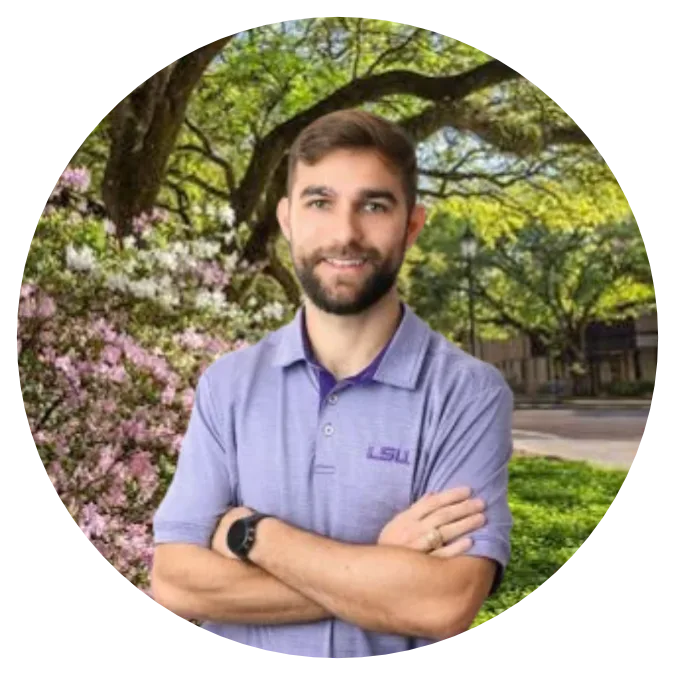
Steven Gros currently serves as the Assistant Director of IFC & Risk Prevention for Louisiana State University. Prior to joining LSU, Gros held positions at Texas A&M University and the Kappa Alpha Order national office. He has spent over six years working in fraternity and sorority life, and has seen firsthand both the power of fraternity to prepare young men for success beyond college and the challenges that can threaten that promise, including the rise of sports betting on campus. Gros is a graduate of McNeese State University and a 2016 initiate of Kappa Alpha Order.