
Guillermo
I was asked to talk about the use of AI in social media. Being the founder of Fraternity Social Media, it was a topic I have been asked about repeatedly and also DM’d a number of posts with a “can you believe they posted this?!”
It is easy to blame people who use AI as a quick way out. The thing is, we use AI every single day, but what gets the most attention is the graphics people share. Do you use Spotify or Apple Music? They use AI to get you to listen to what they know you will like. Do you enjoy movies or TV shows? Well, AI plays a part in what you are seeing on screen. You can’t escape it, and AI has been around for years.
AI has been a topic of conversation at our monthly meetings for some time now. We knew our audience needed guidance once we started seeing numerous fraternity accounts posting “AI slop.” Even amongst our team, there are heavy discussions around AI use: “Should we use it or not?”
For me, I saw the red flags pop up when several fraternity/sorority professionals were using AI to create caricatures of themselves, with props of what they love to do at work or in their free time. As tacky as I may think those images are, they get engagement from people. There are headquarters and fraternity/sorority life offices using AI graphics for a number of their posts, including a two-week countdown to one headquarters’ convention on the West Coast.
Even I hopped on the “Empire State Building Flag Couple” trend on Friday afternoon at the coffee shop. I wanted to see if I could make an AI graphic look good and not have that odd AI sheen. The result was… actually pretty good. We made a graphic asking if people hopped on the trend, added examples of the ways fraternity accounts had incorporated the trend into their social media strategy, and then ended it with the Fraternity Social Media flag. The post was viewed over 28,100 times, had 507 likes, and was shared as a DM over 530 times. In the comments, one follower said, “If I was a rushee and saw a frat using AI for their ads. I am not showing up, personally.” That comment received 22 likes. Another said, “I’m sorry using AI for this stuff drives people away. Not f****** hard to use Canva or Photoshop.” That comment got 25 likes. Our Fraternity Social Media community is passionate and shares what is on their minds. Our job is to help guide young men and those who support them to creatively tell their story before someone else does.
I wanted to bring in two leaders I collaborate with frequently to share their experiences with AI. At Fraternity Social Media, we have an executive board that helps run our digital strategy, curates content, and advises almost 12,000 followers around the country.
Virginia Felton is the assistant director of Leadership Programs & Fraternity and Sorority Life at the College of Charleston, and Steven Gros is an assistant director for Greek life at Louisiana State University. Together, with four other fraternity leaders, we are the Fraternity Social Media Executive Board.
Virginia
It started with the flyers.
I began noticing that recruitment flyers across organizations on every campus were starting to look and feel the same. Same layout, same energy, same vague promise of brotherhood and lifelong connections. And I kept thinking, “there is so much more to these organizations than just that.” I say it all the time: there is power in fraternity. Not in the social calendar, not in the letters on a t-shirt, but in what happens when a young man is challenged, supported, and held accountable by people who chose each other. That power does not come from polished content. It comes from real people doing real things together. So when I started seeing that same flyer, with the same caption, that same email from a student I know well, I wasn’t just noticing a design trend. I was watching something that I deeply believe in get automated.
But the moment that really made me pause was sitting across from a student who had a perfectly good idea. I could see it. He could almost see it. And still, before he’d commit to it, he needed to run it through AI first, just to triple-check. That’s when I realized this wasn’t just about content. It was about conviction. It was about a student who didn’t trust his own voice enough to use it.
As an IFC advisor, I work closely with the men leading their chapters every day. I see how they communicate, how they make decisions, how they represent their organization on and off campus. And increasingly, I see AI woven into all aspects of fraternity. Not always harmfully, but not always helpfully either.
I want to be honest: I am not here to tell students or my colleagues to stop using AI. I use it myself in different aspects of my job. I even encourage chapters to use it for brainstorming events and philanthropy ideas, building event timelines, drafting agendas, and getting organized in ways that used to eat up hours of an officer’s time. AI is useful for generating a starting point when the blank page feels impossible.
The problem is when that starting point becomes the finished product. When the caption goes up unedited on a post. When everything starts to feel automated and generic. Because if the experience feels that way to those viewing the content, what are we actually building? Fraternity is supposed to shape young men into leaders and involved students who are proud of who they have become. That doesn’t happen through the perfect post or agenda; it happens through moments that feel real, personal, and uniquely theirs.
Recruitment is a decision that students make about where they feel like they belong and can grow into something better than they were yesterday. That decision isn’t decided by a flyer that is “cool.” It’s made in conversations with active members about their experiences, running into someone in the gym, or grabbing lunch in the dining hall together. AI cannot manufacture realness. If a chapter’s entire outward identity has been filtered through AI, who are they showing the world?
This issue isn’t one-sided. We see this in fraternity and sorority life marketing and communications broadly, which is something almost every professional touches, regardless of the council they advise. Scroll through enough chapter accounts, and you’ll see the same AI-generated voiceovers, the same trending audio, the same caption formula. None of that is necessarily wrong on its own, because we want students to be trendy and timely when it comes to posting their content. When everyone is doing the same stuff, the content stops saying anything about who they actually are. We need more recruitment videos showing authentic brotherhood or sisterhood, and philanthropy posts that explain why this cause is important to the entire organization. This is what makes Greek-letter organizations stand out among others. It’s a question every fraternity or sorority eventually has to answer: do our words sound like us or just like everyone else?
What concerns me more than the content, though, is what I see happening underneath it. Students are increasingly unsure of their own thoughts. They have instincts, good ones (mostly), but they do not trust them fully until they get the “okay” from someone else. AI has become that instant gratification and check box. I understand 100% that the pressure students feel from professors, family members, and themselves sets a high standard of excellence that can be a stretch to reach at some moments. Leadership development is supposed to build the capacity to think, decide, and act. Every time a student skips that process, even for the small stuff, they miss a repetition that matters.
Outstanding chapters in my book are the ones that think critically, show realness and vulnerability through social media and conversations. When I finally get an email from a chapter president, with typos and sounds like him, I celebrate that because I know he actually put thought into it.
My ask to fellow professionals: normalize AI as an idea generator and an organizational tool. From there, hold to a standard of individuality, creativity, and storytelling. Create spaces where it is okay to fail (for both students and ourselves), and learn from those mistakes. That is a huge part of our job in higher education. AI makes it easy to skip the learning moments. It smooths over the struggle and trial and error and skips right to “here’s a strategic plan for the next 5 years. Now implement.” But to the student sitting across from you, that trial and error piece is the point. The messy parts of leadership and learning are where the power is. We are not here to give them all the answers to be the best fraternity or sorority member of all time. We are here to make this experience (for all involved) meaningful. There is so much power in that, and no algorithm can take that away.
AI is a tool: a useful one. The voice, judgement, and confidence to say, “This is what I think,” and “This is who we are,” has to come from our students. Our job is to make sure students know that, and to create spaces to practice.
If students continue to outsource for every part of their life, we haven’t just lost the story. We’ve lost the point.
Steven
Honestly, AI is a cheat code, but like anything else, you have to know how to use it, or you’ll break the game.
I’ve been working with Large Language Models (LLMs) since early 2023, and it has become a constant in how I start new projects, elevate existing ones, and triple-check my work along the way. Reinventing the wheel every year is hard. But in this field, you can’t just copy and paste last year’s programs, either, because the students change too fast for that. AI has become the bridge between those two realities for me.
A Win Worth Talking About
For my interview at Louisiana State University (LSU), I was tasked with creating a presentation on data-driven risk prevention in fraternity and sorority communities. I was already overwhelmed with work, but this was the first time I had a real opportunity to stretch my creative legs on what risk prevention could look like. I opened Claude, dropped in my prompt, all the resources I had available, and a few ideas I’d been chewing on. From that, Claude helped me build out the concept of a “Community Risk Heat Map.” The idea was to use a conduct log that tracked cases from start to finish to predict what incidents were likely to occur, what educational interventions could happen beforehand to plausibly prevent them, and what the current limitations of that approach were.
I created the charts, identified the impact areas, and gave Claude an outline to help build the full presentation. Before AI, that would have been a week of all-day grinding. I started on a Thursday and presented a completed product on Monday, and still got eight hours of sleep every night. For the solo practitioner, AI can give you your social life back. For team members, it can elevate your ideas to places you didn’t have time to take them alone.
A Failure Worth Sharing Too
That said, I have plenty of failures because AI is unpredictable unless you are very specific, and even then, it can still let you down.
While at Texas A&M University, I tried to use Gemini to make a simple sticker. It took three days to get it to correctly spell “NPHC.” Three days. Something I could have knocked out in an afternoon. I chose the lazy route and tripled my timeline for a worse product I couldn’t even edit. Lesson learned.
Both examples point to the same truth: we shouldn’t be afraid AI will take our jobs. We should focus on learning how to use it well. The human element is non-negotiable. You can craft the most precise prompt imaginable, but you cannot fully predict your output. That’s why subject matter experts still matter. When I’m building a case study on the dangers of predictive marketing and the slide reads “the sorority known as Delta Chi,” I’ve lost all credibility in the room. AI can move fast, but it is never finished until you finish it because your name goes on it.
Building Something New With It
I’m actually in the middle of one of these projects right now. At Texas A&M, we used a risk management framework called the P.R.E.F.F. Model to help student organizations understand the different layers of risk in every event. I loved that model and believe something similar would have real value at LSU. So I went back to my old materials, built an outline of what I needed, noted what adjustments would matter in a different institutional context, and asked Claude to help me reimagine it. What came back was the foundation for what I’m now calling the TIGER Risk Assessment. I took those notes, built a proposal, and used Claude to help make it more accessible to audiences outside of academia. Just one thing to note: when the draft came back referencing “Mike the Good Aggie,” I had to make some edits before becoming the star of a new drama called “How to Lose a Job in 10 Days.”
Where the Line Is
This brings me to what I think is the most important part of this conversation: knowing what is and isn’t appropriate use.
When you need a spark of inspiration or some refinement on an idea you already have, AI is an excellent sounding board. You have to be specific and ask it to be critical, but it can function like the best peer reviewer you’ve ever had. What it should not do is replace your thinking entirely. The more I work with AI-generated content, the easier it is to spot. And you don’t want to lean on it so heavily that people start wondering if it would just be cheaper to hire Perplexity instead of you.
Student Success
Students pick up the same tendencies of their advisor. If your students see you using AI properly, they’ll follow your lead.Get your students to use this tool to send stronger emails. Show them how this can be used to format their proposals. Hell, get them to use AI to learn the difference between “affect” and “effect.” As long as they’re progressing and their products are becoming more professional, we’re supporting the development of the student.
Use the tools that make sense. Use Canva if you’re not fluent in Adobe. Loop in your marketing team when you need a quality graphic. But there’s no reason to spin up an AI image generator and burn through server resources on three designs you end up hating anyway.
AI is a tool: a genuinely powerful one. But the professional who knows their field, knows their students, and knows when to close the laptop and trust their own judgment will always be the one worth hiring.
Guillermo
AI is not going away, and if you want, it is a great tool to help you get your creativity out. Do not let AI take over your brain and what it can accomplish. When we are working with students, let’s encourage their critical thinking skills and not just say, “Did you try using ChatGPT?” There has to be more thought out there. I look at the reports saying that entry-level jobs are harder and harder to get because AI can do it. I get DMs from recent graduates asking if I can provide support with their resumes or if I can put them in contact with someone who is hiring.
We have to stand out and do what machines can’t do. This is what is going to help us in life and in the job market. The personal connections you create cannot be done by robots (at least for now). That is a scary thought, but it is real.
Please, no more AI profile pictures. You are great the way you are, and you do not need a computer to make you look good.
About the Authors

Guillermo Flores is the founder of Fraternity Social Media (FSM), a resource empowering fraternities and sororities to build stronger online communities through purpose-driven content, and frequently speaks at fraternity and sorority leadership conferences, sharing insights on brand building, digital storytelling, and community engagement. He has been a fraternity/sorority professional for 12 years, and is passionate about showcasing the impact of fraternity through authentic narratives that highlight leadership, brotherhood and fun. Flores is a proud first generation American, and his parents are from Guerrero, Mexico.
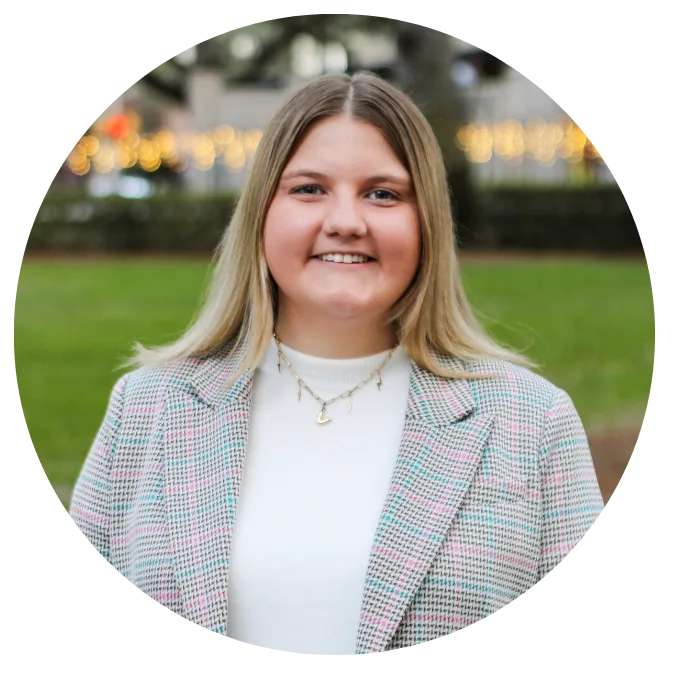
Virginia Felton, M.Ed., is an Assistant Director for Student Leadership and Fraternity & Sorority Life at the College of Charleston. She is a member of Alpha Delta Pi and serves on the executive board for Fraternity Social Media (FSM), contributing to conversations around storytelling, engagement, and the evolving future of fraternity and sorority life. Virginia earned her bachelor’s degree in marketing from Methodist University, a master’s degree in Higher Education Student Affairs from Western Carolina University, and is currently pursuing a master’s degree in communication at the College of Charleston. Virginia is passionate about helping fraternities adapt and grow while staying connected to their values, traditions, and the stories that define their communities.
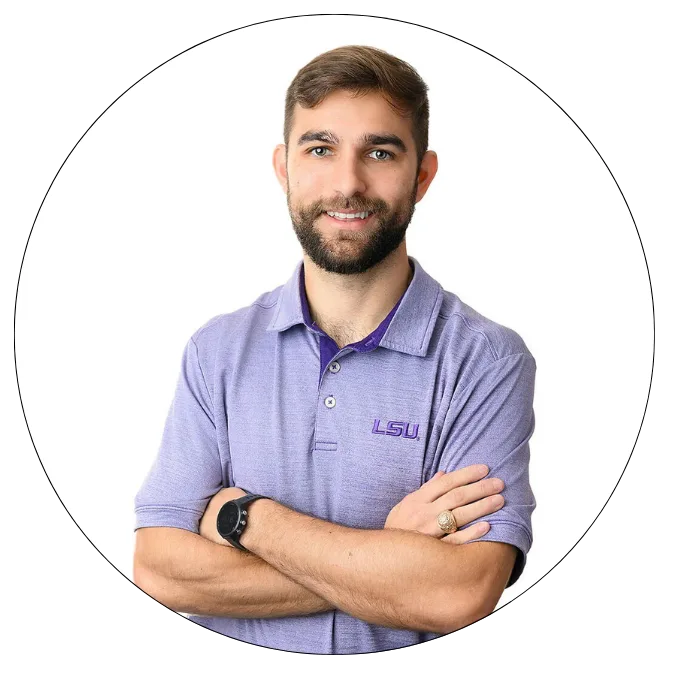
Steven Gros is the Assistant Director of IFC and Risk Prevention at Louisiana State University. Gros began his career with Kappa Alpha Order, where he spent two years helping reactivate chapters and guiding them through the process of establishing their identity. He then transitioned to a campus-based career at Texas A&M University, where he earned his master’s degree in Non-Profit Management while managing the Aggie Greek Life Instagram account and helping tell the story of the Aggie Greek community. He now continues that work by supporting the Fraternity Social Media (FSM) team, helping chapters create authentic, relatable content and showing that you don’t need a marketing degree to learn Canva and produce solid graphics that can capture engagement from your target audience.