
I make it no secret: I’m circumspect of Generative AI. My most tangible concerns are large language models’ (LLMs) use of others’ intellectual and creative property without compensation or attribution, and the outsized environmental impact of data centers, particularly on historically and systemically disadvantaged communities. More viscerally, the kneejerk use of AI agents in answering questions from the mundane to the profound seems to run counter to the quest for knowledge we value in higher education.
In a conversation with colleagues about the use of AI in the work we do with fraternities and sororities, I learned of a troubling anecdote: When asked to assist in the creation of a new member education program, an AI agent would include hazing practices as part of its process. While disturbing, I was intrigued: LLMs, after all, only “know” what they have learned from what humans have put forth. If this was the suggestion of an AI agent, what were we, collectively, teaching them about our industry? With that curiosity in tow, I thought I would give it a try: AI, build me a new member education program!
The Prompt
I decided to ask two different platforms to build me a new member education program. I used Copilot – part of my institution’s Microsoft package – and OpenAI GPT 5 Mini. Before doing so, I started at the ground floor: Do these programs even know what new member education is? After all, AI can sometimes have issues with complex processes. I pitched my first question:
"Are you familiar with the new member education process for fraternities and sororities?"Each platform assured me that it was indeed familiar, with exposition that demonstrated its familiarity. With that clarified, I moved into the big ask:
Great! Can you craft for me an eight week new member education process starting from the acceptance of a bid and ending with initiation? This process should be for a fraternity at a mid-sized public university in the southeastern United States. Please provide a week-by-week outline of information covered, learning objectives, and schedule.The Results
I found myself surprised – heartened even – at the responses. Each platform was quite specific in its week-by-week scheduling, including topics covered, learning objectives, and a schedule for each day. Their plans covered values and expectations, taught local and national history, and intentionally involved creating meaningful connections with fellow new members, the chapter, and alumni. Perhaps most importantly, each plan spoke clearly about hazing prevention, risk management, service, and living their values. The plans outlined who should be involved and support structures that included advisors and campus fraternity and sorority life offices. Given the assertion of hazing related content that led me into this exercise in the first place, I was pleased to see not only that such content was not found in the plans these platforms put forth, but also that each plan directly addressed hazing as something to be avoided and guarded against.
I want to be clear: In no way am I advocating for chapters, new member educators, or headquarters to turn to AI in the development of new member education materials. Rather, what I set out to examine was what large language models had gleaned about the process, and by extension what we collectively were putting forth for those models to incorporate into their amalgamations. In that vein, I am quite hopeful about what we have taught “the machines” about us.
About the Author
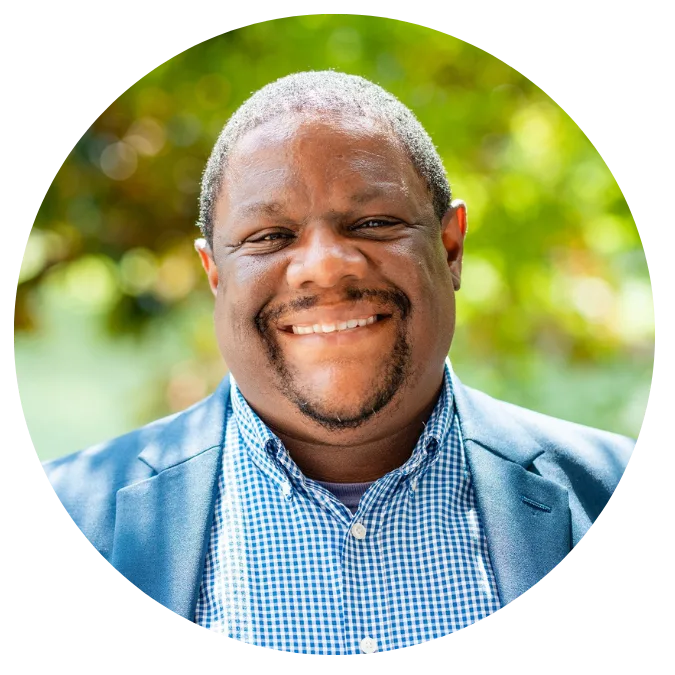
Curtis Tarver serves as the Associate Director for Fraternity & Sorority Life, at the University of North Carolina at Greensboro where he supports a community of 21 organizations. He has been in several roles in UNC Greensboro’s Office of Campus Activities & Programs, and has served the fraternity and sorority community specifically since 2013. Curtis holds a bachelor’s degree in psychology from the University of Maryland, Baltimore County, and a master’s degree in College Student Affairs from the University of South Florida. Curtis is also a member of the 2026 Perspectives Editorial Board.