
Our work in the fraternity and sorority world is built on human connection, where professionals build relationships and help students develop during a critical time in their lives. We do the same when we decide to work for organizations like ours; we join to focus on people. The irony is that more and more of our work is becoming data entry, meeting prep, writing from scratch, and translating program vision to program execution. Artificial Intelligence (AI) is a tool that we can use to help us make a more purposeful connection, not create one for us.
Picture this: you have an afternoon of back-to-back meetings with chapter leaders. You take notes of each conversation to the best of your ability while trying to stay present, but you either miss what is being said or a note that should have been written down. It is now 5 p.m., and you have to stay a few extra hours trying to remember what was said in the meetings and synthesize it. Using AI meeting note-takers like Gemini allows you to be present in your meetings, strengthening the person-to-person connection in every interaction. Members feel it when you are focused on what they are saying and respond meaningfully in real conversations. Automating notetaking and streamlining pre-meeting preparation all unlock the opportunity for you to spend more time deepening your relationships with the members you serve.
Organizations store a lot of membership data on members, programs, and chapters. But data that cannot be understood, processed, and utilized is useless. AI is enabling technical teams to more effectively find correlations that have previously been missed. Imagine asking an AI agent to review five years of chapter health data and getting trend lines in seconds. AI lowers the barrier of asking the right questions and finding trends that actually guide professionals on how to support chapters effectively.
Our organizations are answering the needs of our members and chapters by launching more programs to support their development. This growing responsibility is falling on the same limited number of staff members. AI provides our program designers the ability to create faster without sacrificing quality. This technology empowers smaller departments to develop instructional materials, digital platforms, and outreach strategies with unprecedented efficiency. It bridges the gap between those who have the program vision and those with the technical skills to execute. AI helps our program professionals increase their impact and focus on the relationships that matter.
AI offers an exciting opportunity for fraternity and sorority professionals, but it is an emerging technology that deserves caution and intentionality. Deploying it carelessly carries real risk: member data needs protection, public trust in AI is softer than it was a year ago, and no tool should become a substitute for the human presence that defines this work. The organizations that get this right will be the ones that deploy AI intentionally, always in service of people, and never a replacement for them.
About the Authors
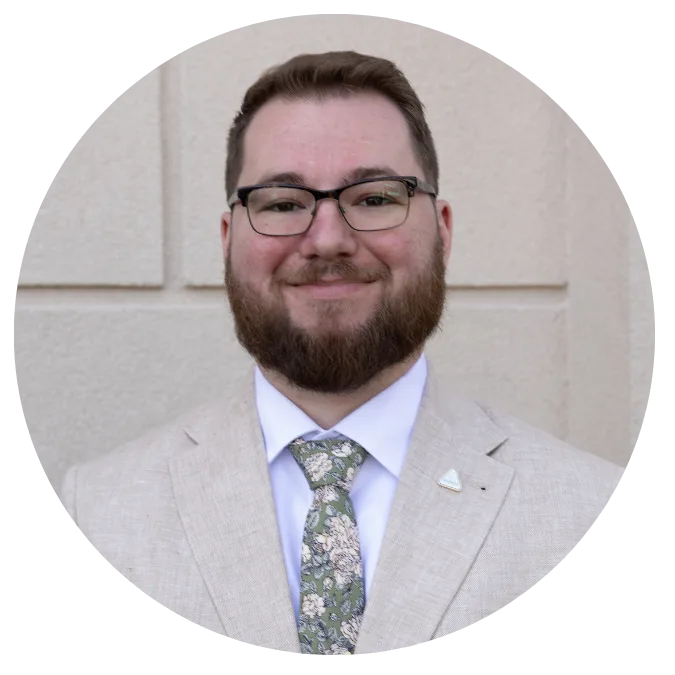
Tyler Weiss serves as the associate director of technology at Delta Sigma Phi. Through various roles and projects over the past five years, he has worked closely with both staff and our members to help deliver a cohesive experience for work and development. Tyler helps oversee general operations of various technological systems, as well as strategic planning for future development opportunities for the organization. Prior to working at Delta Sigma Phi, Tyler worked in the IT Department for the University of North Florida where he found a love for helping people navigate emerging technologies. This passion has fueled his drive for helping the organization reach its fullest potential by connecting our staff with members both virtually and in-person.

Andrew Thomas serves as the director of membership experience at Delta Sigma Phi, where he leads strategy and execution for programs that shape both the undergraduate and alumni member journey. With a background in nonprofit leadership, Andrew brings a mission-driven approach to his work—overseeing major initiatives like the Leadership Institute, Career Accelerator, Civic Engagement Institute, and Day of Service. He also serves as the project lead for Delta Sig’s biennial National Convention. At the heart of Andrew’s work is a passion for developing men—cultivating leadership, purpose, and connection through the Fraternity’s four pillars: Building Relationships, Pursuing Education, Launching Careers, and Embracing Service.