

Fraternity and sorority life advising is rarely a one-size-fits-all practice. As the landscape of fraternity and sorority life continues to evolve, professionals are increasingly called to support communities with distinct histories, identities, and cultural traditions. While historically White fraternities and sororities have long shaped institutional structures, culturally based Greek-letter organizations (CBGLOs) and National Pan-Hellenic Council (NPHC) organizations have played critical roles in fostering leadership, community engagement, and cultural affirmation.
As campuses grow more diverse and students call for more culturally responsive support, professionals must reconsider traditional advising frameworks and expand their understanding of how fraternity and sorority life operates across councils.
My journey advising NPHC organizations and, later, the Diversified Greek Council, has required intentional learning, reflection, and adaptation. My professional background was largely shaped by my Interfraternity Council (IFC) experiences. As a man of color, I understood the importance of identity and belonging in student engagement, while also recognizing that many of my advising instincts were rooted in systems not designed with culturally based organizations in mind.
This article reflects on my experiences advising across council lines, highlighting the successes, challenges, and lessons that continue to shape my approach. My hope is that professionals see themselves in this work and recognize the impact they can have on these organizations.
Beginning with Limited Experience
My first experience advising NPHC organizations began as a graduate student at Texas Christian University. Prior to this role, my interactions with NPHC organizations or CBGLOs largely came through friends who were affiliated rather than through a deeper understanding of the organizations themselves. While I understood fraternity and sorority life broadly, I quickly learned that familiarity with IFC structures did not translate to effective advising in this context.
I understood that this lack of experience could be a barrier, but it became an opportunity to lead with humility. I learned early on that my role was not to arrive with answers, but to listen, observe, and remain open. Showing up consistently, asking thoughtful questions, and resisting the urge to compare organizations to IFC norms allowed me to begin building relationships rooted in respect rather than authority.
Understanding Culture and Organizational Identity
Advising NPHC organizations and CBGLOs requires more than familiarity with policies or event logistics. These organizations are grounded in culture, history, and collective experience. Many were founded in response to exclusion and continue to center community uplift, cultural affirmation, and intergenerational accountability.
Applying IFC-centered frameworks to culturally based organizations can unintentionally create tension or erode trust. Students do not need advisors to reshape their organizations to fit institutional norms. They need advisors who understand how culture informs leadership, engagement, and accountability. Recognizing this distinction allowed me to shift my approach from oversight to partnership.
Why Understanding These Organizations Matters
Understanding NPHC organizations and CBGLOs is essential. These organizations represent more than involvement opportunities; they carry legacies of resilience, advocacy, service, and leadership that extend far beyond campus boundaries. Scholarship underscores that many were founded in response to systemic exclusion and remain deeply rooted in cultural affirmation and community uplift.
When professionals fail to understand these organizations in their historical and cultural contexts, their advice can unintentionally cause harm. Misaligned expectations, policy enforcement without cultural awareness, and the application of dominant council norms can marginalize students whose organizations were never designed to mirror historically White models.
Conversely, informed advising becomes a tool for equity rather than control. Grounding advising in historical knowledge helps professionals understand why traditions, leadership structures, and accountability processes differ across councils. This affirms students’ identities, supports organizational sustainability, and challenges institutions to examine how their practices may privilege certain councils over others.
Students deserve advisors who see their organizations not as deviations from a norm, but as intentional communities with purpose, legacy, and impact.
Positionality as an IFC Man of Color
While my racial identity helped create moments of connection, it did not automatically establish credibility. Shared identity does not replace shared experience. On more than one occasion, I was reminded that my undergraduate/professional background shaped how others perceived my role.
As one chapter advisor made clear,“You are not a member of NPHC, you should not be advising them.”
While difficult to hear, this statement surfaced an important reality. Advising these historical organizations often invites questions of legitimacy, authority, and trust, particularly when advisors do not share membership in those organizations. Rather than disengage, I used these moments as an opportunity to reflect on how credibility is built through action, consistency, and cultural respect rather than affiliation alone.
Navigating this tension required transparency and self-reflection. Naming institutional constraints while committing to advocate alongside students helped reposition my role from gatekeeper to collaborator. This work challenged me to sit with discomfort and expand my understanding of what effective fraternity and sorority advising can look like.
Learning the Language as a Pathway to Trust
One of the most impactful ways I connected with students was by intentionally learning the language of the organizations I advised. While councils fall under the same umbrella, each operates with its own language, norms, and meanings. Terminology related to membership, alumni engagement, and chapter operations varies significantly. Using IFC-centered language can signal a lack of understanding. When I adopted the language students used to describe their experiences and traditions, it communicated respect and investment.
This is not cosmetic; this is foundational. Learning council-specific language helped build trust and reinforced students’ confidence in me as a professional who understood their culture rather than one who expected them to translate it.
Deepening Understanding Through Research
Recognizing the limits of experiential learning alone, I began reading books and scholarly works focused on the history and lived experiences of these organizations. As part of this intentional learning, I read the informative Black Greek 101 by Walter M. Kimbrough, African American Fraternities and Sororities: The Legacy and the Vision by Tamara L. Brown et al., and Moving Culturally-Based Sororities and Fraternities Forward: Innovations in Practice by Crystal E. Garcia and Antonio Duran.
These texts provided critical historical and cultural context for understanding the traditions, structures, and expectations of NPHC organizations and CBGLOs (Brown, Parks, and Phillips, 2005; Kimbrough, 2013; Garcia and Duran, 2021). Engaging with this scholarship strengthened my advising practice by grounding my work in history rather than assumptions and signaling to students that I valued their organizational heritage. Do not let these books gather dust on your shelves; read and apply their lessons and context.
Using Social Media as an Informal Learning Tool
Another tool that significantly supported my growth as an advisor was social media. Much of what I now understand about NPHC organizations and CBGLOs comes from observing how they show up online. Social media captures celebration, pride, accountability, conflict, and critique in ways that formal training and institutional documents often do not.
For me, social media served as a window into these organizations beyond the primary sources I used on campus. It provided insight into regional and national conversations, organizational values, and broader trends shaping fraternity and sorority life. This perspective helped me contextualize local chapter experiences within a wider state, national, and international framework.
At the same time, social media requires critical consumption. Online content often amplifies extreme moments and may not always reflect an organization’s full values or daily operations. As advisors, we must remain mindful that social media offers perspective, not conclusion, and that student voices and lived experiences must remain central to my practice.
Successes Rooted in Presence and Consistency
My most meaningful successes did not come from programs or initiatives, but from relationships. Consistent presence at meetings, educational programs, and high-level events signaled commitment beyond moments of crisis or compliance. Over time, students began to see me not as an external authority, but as a trusted advisor invested in their success.
Co-creating expectations with student leaders further strengthened these relationships. Rather than imposing frameworks, we discussed how leadership, accountability, and success were defined within their cultural contexts. This approach honored organizational autonomy while still aligning with institutional responsibilities.
How Advising Across Councils Reshaped My Advising Practice
Advising NPHC organizations and CBGLOs forced me to examine my advising style more critically than any other role I had held. It challenged the assumption that effective advising looks the same across councils and reinforced that adaptability is a strength, not a weakness.
I learned that presence matters. Credibility in these spaces is earned through consistency, listening, and respect for organizational history, rather than positional authority alone. This shifted how I approached advising conversations, encouraging me to prioritize trust before problem-solving. Communication styles also mattered. Directness, tone, and timing carried different meanings depending on the organizational context. What felt efficient in one council could feel dismissive in another. Navigating these differences required humility and reflection. Most importantly, this work reminded me that adapting my advising style does not mean abandoning core values. Accountability, safety, and integrity remain constant. What changes is how those values are communicated and enacted.
Implications for Practice
While challenges remain, there are encouraging shifts within fraternity and sorority life. More professionals are engaging with scholarship on culturally based organizations, and institutions are recognizing the value of council-specific approaches. These developments reflect a growing understanding that effective advising must be flexible, culturally aware, and grounded in partnership with students.
My experiences confirm that effective advising is rooted in relationship-building. Research supports that proactive outreach, intentional listening, and relational advising practices strengthen student engagement and outcomes (Inside Higher Ed, 2023), reinforcing the importance of relation.
Advisors do not need to be members of every organization they advise, but they do need curiosity, humility, and a commitment to learning. Understanding culture, language, and history allows advisors to support students more authentically while maintaining consistent expectations.
For professionals advising outside their primary council experience, particularly across cultural and organizational lines, several considerations emerge:
- Lead with learning and humility
- Understand language as a form of respect and trust-building
- Invest in historical knowledge to inform contemporary practice
- Engage critically with social media as a contextual learning tool
- Advocate for culturally-responsive advising practices within institutions
Despite progress, the field still has work ahead. Many institutional policies remain rooted in historically White models, which can marginalize culturally based organizations. Professionals may also enter roles with limited exposure to these communities. Supporting these organizations requires more than inclusion; it requires rethinking the systems themselves. Institutions must invest in professional development that centers on culturally responsive advising and challenges long-standing assumptions.
Advising across council lines has challenged and affirmed my professional practice. The work has required humility, intentional learning, and sustained presence. By learning organizational language, engaging critically with history and social media, and centering student voice, I have strengthened my ability to support CBGLOs in meaningful ways.
These experiences have reinforced that effective fraternity and sorority advising is not about mastering every council structure. It is about honoring the people, histories, and cultures that make these organizations thrive. My challenge to those who have these organizations on their campuses:
- Become more invested.
- Become more informed.
- Become more committed to the success of these organizations.
References
Brown, T. L., Parks, G. S., & Phillips, C. M. (Eds.). (2005). African American fraternities and sororities: The legacy and the vision. University Press of Kentucky.
Garcia, C. E., & Duran, A. (Eds.). (2021). Moving culturally-based sororities and fraternities forward: Innovations in practice. Peter Lang.
Flaherty, C.. (2023, March 9). Eight ways to boost student engagement with advisers. Inside Higher Ed. https://www.insidehighered.com/news/student-success/academic-life/2023/03/09/eight-ways-boost-student-engagement-advisers
Kimbrough, W. M. (2013). Black Greek 101: The culture, customs, and challenges of Black fraternities and sororities.. Fairleigh Dickinson University Press
About the Author
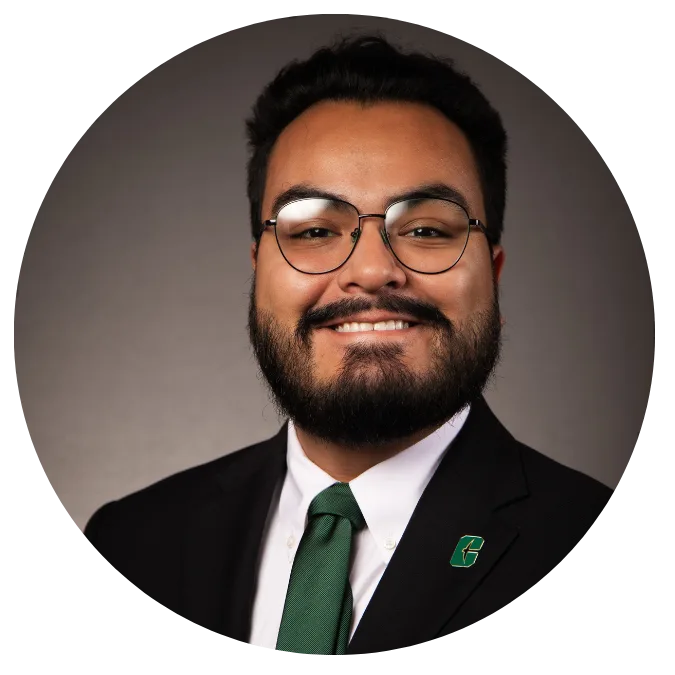
Rogelio Nuñez is a higher education professional passionate about student success and community development. He currently serves as Assistant Director for Fraternity and Sorority Life at UNC Charlotte. Rogelio earned his M. Ed. in Higher Education Leadership at Texas Christian University. Rogelio is also a member of Tau Kappa Epsilon and actively volunteers with his fraternity, further supporting the growth and development of fraternity and sorority communities.