


New to the profession? No graduate assistantship experience in a fraternity/sorority life (FSL) space? No higher education degree? Here are things that helped me as I approach two years in the field.
It is February 2024 and I am a couple of weeks into my last semester of my three-year master of public administration (MPA) program, which also means it is my last semester as the campus-wide prevention graduate assistant (GA) at Tarleton State University. I have no clue what I am going to do next, but I think it may have something to do with a public institution, whether that is higher education, local government, or nonprofit work. My undergraduate degree is a bachelor of science in political science, and with my MPA I have not quite decided where I fit in a post-grad world or what direction I want my career to take. I have been working as the prevention GA for almost three years now, and I think working at a college could be something worth seeking out, even if I am not entirely sure what that looks like yet.
What do I do? I click on my Facebook app and search for the NASPA Student Affairs Facebook page — you know the one! I scroll for a bit, casually at first, and then more intentionally as I realize this might actually lead somewhere. I see a couple openings and one sticks out to me: Assistant Director for Fraternity and Sorority Life at Kansas State University. “You are joking,” I say out loud as I look up at my K-State Big 12 championship football poster hanging in my office. I applied to K-State in high school but decided not to go, and I have been a fan my whole life. It felt like a sign, and honestly, I could not ignore it!
So, with no higher education degree and little FSL experience, I was a first generation FSL student who had no clue this could lead to a job. My parents are still wondering how I did this (and what I am doing), and honestly, some days I am too! Still, I applied for the job two states away from home. Spoiler alert: I got the job! Here are some of the methods I used to become the professional I am today, in a field I knew nothing about, doing a job I have fallen in love with more than I ever expected.
When anyone starts a new job, they are given onboarding tasks: trainings, scheduled lunches and introductions on their calendar, and maybe a login to a Google Drive that feels overwhelming, but is full of knowledge on everything that has happened over the last 300 years. It can feel like information overload very quickly! Most of these tasks are very important but might not feel like they are truly helping you understand the job at hand or how you actually fit into the role.
My supervisor, Dee Hawks, broke up my first week into daily to-do lists and “things to read, watch, or listen to.” This structure made a huge difference for me as someone walking into a brand new field. The to-do list included simple tasks like getting my ID card, sending out my welcome email, and meeting with HR, but the other, more FSL-centered list was full of a wide variety of ways for me to learn from professionals in the field on different topics and perspectives. It gave me a way to start building context that I found incredibly valuable, instead of just completing tasks.
Below is what was assigned to me for the “things to read, watch, or listen to today” on my first day on the job:
- “Graduate From Surviving to Thriving” Blog Post
- AFA Annual Meeting Reload: Wait, What?! Things You Want to Know as a New FSA
- AFA Essentials: Onboarding…and Being Onboarded
- AFA Essentials: What I Wish My FSA Knew: Perspectives from a Former Collegiate Leader
- Supporting Fraternities and Sororities in the Contemporary Era: The Role of the Campus Professional and The Association of Fraternity and Sorority Advisors
- Dyad Podcast: Season 1, Episode 5 Professional Readiness in FSL
If you cannot tell, we are big fans of AFA in this office, and no—they did not pay me to write this article. At that point in time, I had no idea what AFA really was or the impact it had on professionals, but I recognized the logo and trusted that the content was worth exploring. When Dee sent me the link to sign up for First 90 Days, I entered my information and waited for the first class, not fully knowing what to expect.
The First 90 Days class felt like “how to be an FSA 101,” which was exactly what I needed. It was great for someone who literally knew nothing outside of their own experience. I joined Delta Phi Epsilon as a 21-year-old new member, and my second semester in my chapter was spring 2020, so my exposure had been limited. The First 90 Days equipped me with a foundation of knowledge to build on, a cohort to connect with, phenomenal professionals who came in and spoke to us every other week, and two incredible women who kept us engaged and grounded each session.
My experience with First 90 Days ended before my first AFA Annual Meeting, and because of this I learned ways to get involved in the space early on. I signed up to be an educational session ambassador, volunteered at the silent auction, and participated in the Order of Omega case study, where I was randomly paired with a woman from my First 90 Days cohort who I now call a friend!
Utilizing the resources offered by an organization created by and for people who do this work is a luxury. It is a great space for new professionals to gain confidence not just in their knowledge but also in their ability to build connections in the field and feel like they belong in the room, which is huge when you are brand new.
Let us continue the conversation of volunteering with academies and leadership programs that inter/national headquarters and campuses host each year. About six months into the job, I started out 2025 by driving down to Texas Tech’s Greek Summit, where I built relationships not just with professionals on that campus but also with lead facilitators and small group facilitators, not to mention incredible students in my small group.
From there I volunteered at Alpha Chi Omega’s Leadership Academy, and that summer I went to the Undergraduate Interfraternity Institute (UIFI) for the first time as a small group facilitator. It was an experience that changed my life and truly brought me close to exceptional people in this field. It pushed me in ways I did not expect and helped me grow both personally and professionally.
From there, I was hooked. At this point I have facilitated for a handful of groups, including Delta Upsilon Fraternity’s Presidents Academy — my first time facilitating for a fraternity — which pushed me as a professional and as a person in a completely different way. I am a better professional and person for it and cannot thank them enough for that experience.
Volunteering your time for headquarters and facilitation experiences is, in my opinion, one of the best ways to meet people, build connections, and show your students that you are invested in their organization. The look on my students’ faces when I can reference acronyms or systems from their chapter is worth it every single time. It also matters when I can tell them I am attending these experiences or share group photos afterward. It helps them feel seen and strengthens our connection in a very real way.
Most of these experiences were paid for, though sometimes I had to wait for reimbursement. Why not take the opportunity for an incredible experience that costs little and gives back tenfold in skills, friendships, memories, and connections that last far beyond the event itself?
Does the above feel overwhelming? Maybe you are in a small office and do not have the capacity to travel or the funds for these experiences. Those challenges are real, and it is important to acknowledge that not everyone has access to the same opportunities. Here are some ways I have become more confident and knowledgeable without leaving town.
- Get out of your office! In no way am I saying to waste time, but to spend time in communal spaces in your office or building. I am lucky to have a shared space within our office suite, so when students are talking about their favorite movies or whatever topic sparks your interest, go join in. Whether that is stepping into the conversation or bringing your laptop out there for thirty minutes, it matters more than you think.This is something I have really enjoyed, maybe even a little too much. Dee calls it “building community,” which is not untrue, and honestly, it has made a huge difference in how connected I feel to the students I work with.
- Lean into the discomfort and the unknown. I would even say free fall into it! There is nothing wrong with not knowing what is going on, but there is something wrong with not trying to figure it out. No one will fault you for not knowing what you do not know. Everyone is learning, even the experts, and that does not stop once you are a few years into the role.
- Remember: You were hired and chosen for this role, so lead with confidence. Confidence in your abilities, confidence in owning that you still have things to learn, and confidence in who you are at your core. Do not let this work or your environment take you away from who you are. Some days I feel confident in who I am and what I bring, and other days I need to look at sticky notes from students and cards from friends to refill my cup. That is okay too, and often those are the moments where you grow the most and remind yourself why you are here.
- Use the many resources available to help fill the knowledge gap you have or think you have. Take advantage of experiences across the country and on your own campus in everyday moments, because both matter in different ways.
- Show up in your students’ spaces, whether that is a philanthropy event, getting in a dunk tank for a council event, or getting on a plane to facilitate leadership programs. This work is about people, and that reality should be what you hold closest throughout your time in this role.
- Learn all you can and become knowledgeable: an encyclopedia of experiences and information that will help you do this work well and make your students feel seen. At the same time, do not forget to show up and build those connections in simple, everyday ways.
The most important part of this job, and feeling successful in it, is building genuine relationships with students and earning their trust. Let them know you are cheering them on and advocating for their best experience, even when things are hard.
You can do this job, and you can do it well. Believe in yourself and believe that others believe in you!
About the Author
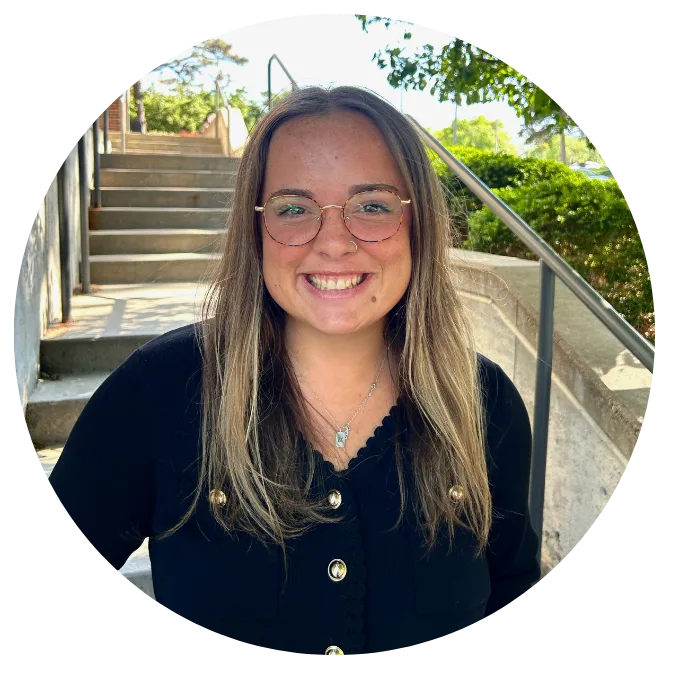
Margaret Tippie is the Assistant Director for Fraternity and Sorority Life at Kansas State University, where she serves as the Panhellenic advisor and supports a dynamic community of sorority and fraternity members. Approaching her second year in the role, she advises the Panhellenic Council, coaches 11 chapters, supervises a graduate assistant, and helps lead prevention and awareness initiatives within the community. Margaret attended Tarleton State University for six years, where she earned her Bachelor of Science in Political Science with an emphasis in American Politics as well as her Master of Public Administration. In her free time, she enjoys consuming a slightly absurd amount of media, whether that is books, TV shows, or making her way through her Letterbox watchlist, usually from the comfort of her favorite chair.