About the Author
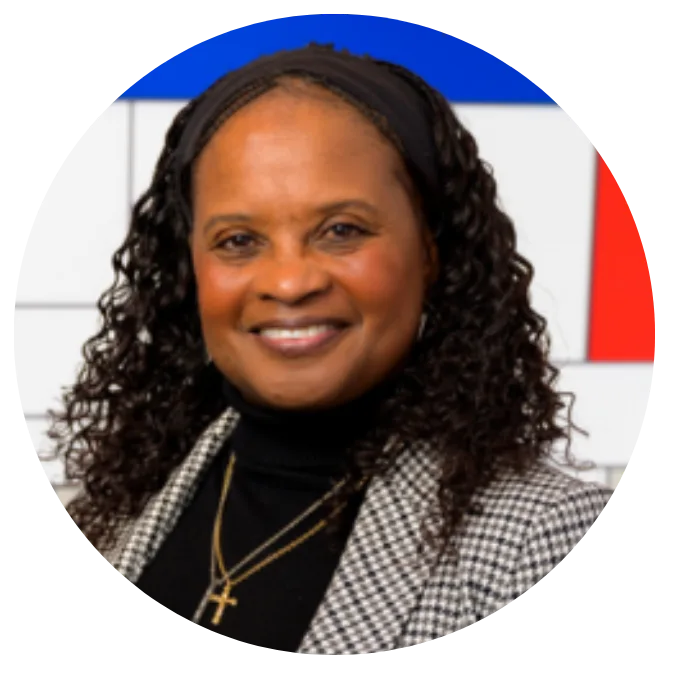
Dr. Jennifer ‘JJ’ Jones is the Executive Director of Student Development and Engagement, the Director of the Office of Social Change and Intercultural Engagement, and the Cultural Intelligence Officer for the Division of Student Affairs at Southern Methodist University. She has been employed for over 30 years, 16 of those years in various positions within Residence Life and Student Housing. She has served as president for both AFA and the National Pan-Hellenic Council, and is the program lead for the Black Greek Letter Consortium for the All of Us Research Program in partnership with the National Institutes of Health. Jones holds a bachelor’s degree in sociology, and a both a Master of Liberal Arts and doctoral degrees, all from Southern Methodist University.
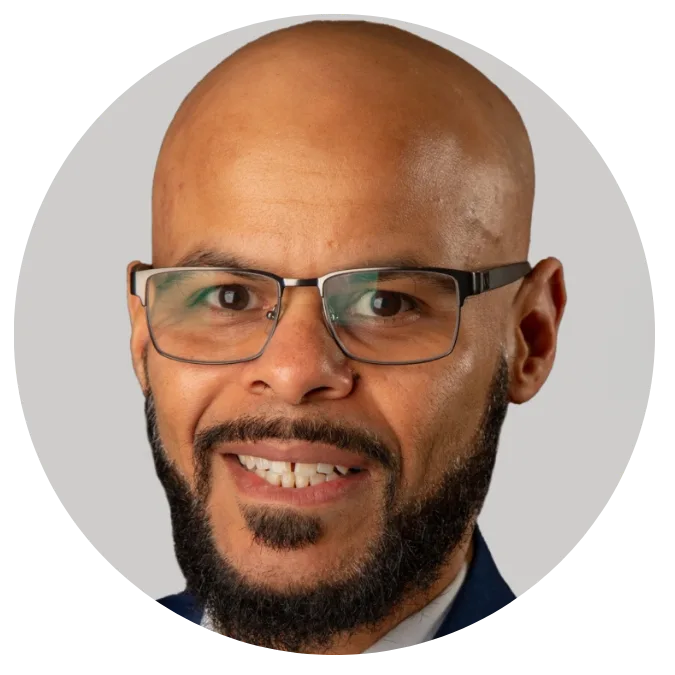
Dr. Rafael Matos is a scholar-practitioner who has worked on various college campuses and served in a consultancy capacity to multiple organizations. He earned his bachelor’s and master’s degrees from the University of Southern California, and a PhD in Communications Media and Instructional Technology from Indiana University of Pennsylvania. He is the Vice Chair of Research and Scholarship for the Coalition on Men and Masculinities, the Research Chair for the Minorities and Communication Division, and a lecturer at the Medill School of Journalism, Media, and Integrated Marketing Communications, at Northwestern University.
Transcript
Dr. Rafael Matos: All right. Greetings to all our Perspectives viewers, listeners, readers, welcome. You know, today is an honor for me to sit down with the legendary, the incomparable, one of the most amazing people I’ve ever met in my life who I get the pleasure of calling my soror, Jennifer Jones, who is a very much a respected leader in the fraternity/sorority community. A pillar, if you will, and especially, whose work has been very instrumental in shaping the relationship between NPHC (the National Pan-Hellenic Council) and AFA. So today, our conversation is more than just history. It’s about progress, partnerships, and the intentional efforts that help bring NHPC voices and perspectives to the center of our field.So Soror Jones has witnessed and contributed to the evolution firsthand, and her insight offers a powerful lens on how inclusion, advocacy, and collaboration have transformed AFA over time. So, Soror Jones, thank you for joining us and for being willing to share your story with us today. And, so as we begin, I want you to tell us who you are and tell us a little bit more about yourself.
Dr. Jennifer JJ Jones: Okay. Thank you for that, my good brother. It’s an honor also to be working with you. You know, we go way back. Way, way back. But, again, like you said, I’m Doctor Jennifer Jones, and I currently serve as the executive director of student development and engagement at Southern Methodist University, as well as the director of the Social Change and Intercultural Engagement Office at SMU and the cultural intelligence officer. Right. Yeah, right. Guys, we just changed the name “Cultural Intelligence Officer” for the Division of Student Affairs, all here at SMU. I’ve been here for a long, long time. I’ve done a whole lot of stuff. Within student affairs here, you name it, I’ve done it. From the dean’s office to residence life, multicultural, I’ve done it all. Been advisor to the National Pan-Hellenic Council here at SMU, as well as serve as a regional officer for the National Pan-Hellenic Council as well as the national first vice president for four years, and then the ten year reign as the president of the National Pan-Hellenic Council. Originally from Texas, southeast Texas, little small town, where I grew up. And never in a million years would I have thought that I’ve done and done all the things that I’ve done. And a lot of things have been made available for my life because of me being a member of the amazing Zeta Phi Beta Sorority, Incorporated, that I have the pleasure of being a member for over 40 years. So I’m excited to see you guys go out. Yes, and it has been a ride. It’s been a wonderful ride. I will say this, and everything that I’ve done, I think it’s all had purpose. And which I appreciate that for my life. I mean, structure, I need purpose. And I think I’ve received that. I would never have done anything over again through the trials and tribulations and all the things, I would never change anything. I’m a mother. I’m a grandmother of a lot of little buggers. Eight of them – four boys and four girls – that I enjoy when I have that time to enjoy them, I enjoy them. But, you know, it’s just life has been living for all the years. And again, I would not change anything that I’ve done in the way that it’s been done, no matter what.
RM: Well, thank you so much for sharing it. And let me tell you that I see your passion in the work that you’ve done, just watching from a distance and see the things that you dealt with the All of Us campaign and just the fact that you rep Zeta with such great zeal, because it’s hard to be in one of these organizations. No matter what, the council is just people be peopling, right. Let’s jump into the questions. All right. Can you take us back to the early days? What the NPHC representation within AFA looked like when you first became involved, and what were some of the barriers or opportunities that existed at the time?
JJ: So I think my first AFA was in San Francisco, and it was probably in 1996, I’m thinking. I had never heard of it, but I had taken the role as the National Pan-Hellenic Council advisor at SMU. And one of my colleagues who was working with IFC invited me and hesaid, now you this I wanted you to do this. So we flew to San Francisco. And when I got there, the only organizations that I saw that was there in some numbers were, Kappa Alpha Psi and Sigma Gamma Rho. And I actually was I had some conversations with some of those members about our presence as NPHC there, because there wasn’t very many of us at all. Like, you could literally count them on a couple of hands and a couple of feet maybe. But I talked about that, like, what is this all about? And they’re actually, at the time, one of the Kappas past presidents was, serving in a position on AFA.He’s since deceased. I cannot remember, Robert. I can’t remember his name. And I don’t want to mess up his name, but I found out I, you know, I just talked to, several members. Walter Kimbrough was actually there and Lawrence Ross was there. And I remember us having a sidebar conversation, and I was like, well, where is NPHC? Tell me about this. And they kind of got me up to speed. And they were kind of new members as well as we were having those conversations. And I remember, there was a reception, so they were having all these receptions and I was like, there’s no NPHC reception. What’s going on? Like, what’s happening. And I can remember, one of the who was this I cannot remember and and Mary. Oh that’s bad. We’re like, can’t remember these names. That’s bad because my mind is is so. But Peterson, Mary Peterson, that was her name. Mary Peterson was working as a liaison, I think, between AFA and NPHC. So I think they were trying to build up the the membership and the NPHC. And we actually had a conversation. There was a conversation not only with myself, but with several members of the Divine Nine about our representation at AFA. And we were we were, we were voicing our concern that there weren’t very many members. The programming was not geared toward NPHC, NPHC in general, but there was things that we could gain because some things when you talk about poetry and sorority life is universal. So those things that we could get information about us, but there was nothing that just was geared toward ua. There wasn’t a track that was geared toward NPHC. So we were able to voice those concerns, I cannot remember who was the president at the time. It wasn’t Amy Vojta, but it was, I think, like a couple of presidents before that. But we began to talk about the three of us, Lawrence Ross, myself and Walter (Kimbrough) began to talk about doing a reception, because actually the Kappas had a reception like the next year, the following year that I went there. So they had a reception. And Richard Snow was the organizer. He was executive director of Kappa at the time, and he had organized that. So I said, well, what if we do a NPHC reception with the help of Kappa partnering with there? And again, there was Sigma Gamma Rhos that was there as well. And then that group of folks that had that conversation with MaryPeterson said, yeah, we’ll do it. We’ll make it happen. And so I kind of became the point person, I don’t know, by choice or by force, but we said, we gotta get a room, we’re going to have this reception, all the things. So I actually put my personal money down to actually hold the rooml, because you would get a discounted room what you did along with the AFA. So I put my personal money down. I began to call some of the people who were at that meeting and say, yeah, we’re going to make this happen, and they get a lot of play. But I did reach out to Richard Snow and I said, y’all, but y’all done this, help me make this happen. And he was very instrumental in us having our first NPHC reception that people came. That became a space for us to just meet, gather, you know, talk, you know, and have a good time. And then it just continue to go on and on and on. And I think, I was involved in AFA from a advisor’s point of view. So once I became a member, I got involved with the association on my own personally. And I became, I think a regional director first. I was a regional director, then I became the VP of membership, and then it became strategic. So I can remember when Michael Bouy was the president of NPHC, it became strategic that we were placed in that position so that we could be at the table to be able to add to the conversation, but also to be able to personally voice concerns if there was any there. Again, Sigma Gamma Rho and and Kappas was showing up in numbers. And you know, we saw the value in being there with particular when we’re having a fireside chats like that was not like, this is cool. Like we can actually get all these, you have all these people here at the same time to actually begin to voice our concerns on about our chapters on these college campuses. So we utilized that a lot. And I mean, it was a time when, working with as a vice president and with Michael, that whenever anybody had a workshop that had anything to do with NPHC, it had to be vetted through NPHC National, which was amazing. So Richard Snow was kind of our white person to get that information to the council presidents so they can say yay or nay or whatever. So their concern at the time was they didn’t want people out there talking about our member organizations or NPHC when they’re not even affiliated with their organization. So that’s how that all came about. So fast forward, I mean, the evolution was constantly happening. Then I become president and I was constantly saying, to the council of presidents, that we needed to be there because I saw the value in that. And I was harping on and harping on it. And I can remember that Cynthia Butler McIntire, who’s a national president of Delta Sigma Theta and the chair of the Council of Presidents at the time, she said, JJ, we’re going to go. You’re always talking about AFA so we’re going to go. And so in 2013, I’ll never forget we have representation from all Divine Nine. Most of them wore the presidents. There was a couple of them this and their executive director because they couldn’t come. But they were there and they came. They participated. They saw the value in it. And that became a thing. So all of them began to bring their regional directors to the conference and participate, providing workshops, providing guidance. Our NPHC reception grew. So we were there. We were there. We built like true partners, with AFA, and just I mean, we had our we were given a town hall as well as a program. So we were always given that as a given. So that partnership lasted is still continues. There have been up and downs with that, that, that participation. Where it stands now, I haven’t been there in the last two years. I hear, murmurs about what that partnership should look like and who knows. We have a whole bunch, a whole slew of presidents that are unfamiliar, you know, that you may have a regional director that becomes a president that understands AFA. And so that continues. But I don’t know where that is, not yet really speak on that positively right now, because I haven’t been engaged in the last couple of years. So I know that they still go. We even would have our national NPHC meeting at AFA, in that space while we were doing that, because we thought it was a great time to gather because our membership was there and we were able to get some business done and be a good partner as well. That was a lot.
RM: It was great context. Now, I can tell you that we’re still attending, all nine of us still attending. That was the first evolution was getting us to do that on a consistent basis, next evolution to be determined by we’re still going and still engaged. So I know that the fruits of your labor are still bearing fruit. You talked about becoming a regional director because strategically that gave you a seat at the table. I want you to tell us more about what were some pivotal moments or individuals who helped ensure that NPHC voices were not only heard, but also value in AFA spaces.
JJ: Oh, several. The presidents that I work with, Jay Anhorn. Is that his name? Last name? He was out. I can’t remember what school he was at, but he was a president. And then Kyle Pendleton, like a lot of those presidents, like, they got it. They got it. I began to go to NASPA as well. So it was just a great partnership. Then you begin to see the same people at all of these national conferences where you could have great, great dialog. But some of those presidents, oh, I can’t remember all the other names, but they were very supportive of me. And they called on me for a lot of things outside of AFA. So I was a part of the, coalition that did those assessments on college campuses. That was an initiative that grew out of a partnership with AFA. And I see and a bunch of folks. So we would go to college campuses and look at their Greek life system and gave, recommendations on what they should or should not be doing. So I was a part of that coalition at the very beginning. I also, because of my membership with AFA and I was able to partner with, Circle of Sisters (Circle of Sisterhood), which is a national initiative that works with different sorority chapters and getting building opportunities for women, not necessarily in America, but overseas, to go to school, to go to college, to go to school. Because a lot of countries do not educate their young girls. So we have built schools. We’ve done we provided grant funding for that. So I was one of the first trustees that did that, all because of being a part of that partnership. Just I mean, just connecting with NPCon a different level. I was actually the keynote for one of their national conferences and build relationships from those women that was a part of NPC and then were single individual organizations. I was able to be at their tables at the be it conversations, that they were having. Again, we did, with NASPA when the invitation came out that we needed people to participate in these, thought provoking conferences or just think tanks. I was invited to that just because of my work, at being partners with AFA. So I’ve done a great deal, but it was always to be at the table. So, so NPHC’s voice will be heard, which also led to NALFO and MGC. So as they were coming along, I was either the vice president or the president of NPHC and to help them lend their voice at the table. So there was been times that I’ve invited them to different things, like our conferences, to be a part of those conversations as well. So it’s been a lot I I could go on for days, because my membership has afforded me those opportunities and to connect people who you would never thought would be connected. You know, it’s just been, the National Hazing Prevention Month, we became a part of that. We had a national hazing statement that all the council presidents would sign every year. It was from my knowledge and gaining knowledge from different opportunities, from being at the table. This is what we’re doing nationally and bringing NPHC as a part of that, to be a partner of all those things.
RM: So as I was listening to you want something that really stuck out to me is that while representing NPHC, it wasn’t just about that council, but how does that build relationships with other entities where the council’s individuals, key individuals that can position that council to really receive the support and other things?
JJ: Yes. Yes, definitely. So NASPA which is the National Association of Professionals in Higher Education. So that one year again, we were able they would have a Greek symposium before the National conference, like a couple of days before the national conference happened. I was able to convince those national presidents to attend that even if they could not come, I think we had six out of the nine that attended that. And again, they were at the table to talk about issues that dealt with their chapters on campuses that they may not, may or may not be aware of. Some of them were not aware of. They’re like, what is this? But they entrusted me to be at those at those tables. They have those conversations and then be able to open the door to invite them in to be a part to have those, critical conversations about where Greek life was going, because there was periods of times where hazing was at the all time high across the board. And so we were having some really critical conversations on what can we do, how can we be a part which included NPHC? Because of the opportunities that I’ve had to invite them into those conversations. So, and now they know I was actually, the chair of the knowledge community, the fraternity and sorority knowledge community for NASPA, which was, again, another door open to get us in the door and invited. So you’re not a student affairs professional and a lot of our our presidents aren’t. And a lot of them went to HBCU’s. So the way their mindset was, they understood PWIs and they understood how their chapters relate to a PWI, you know, but they didn’t know the bigger picture of that. And so I was able to bring that snapshot of what working on a PWI meant, not only for your chapters, but holistically in the conversation when we began to talk about fraternity and sorority life holistically across the board.
RM: There’s great context and perspective to give. I would imagine that as you start to collaborate with others, that there are going to be some challenges that arise. And so I, I’m curious to for you to share about how do NPHC leaders navigate cultural misunderstandings or differing expectations within a professional association that formany years really reflected predominantly NIC and NPC perspectives?
JJ: I think there was a dynamic that happened at AFA and I’ll never forget 2015 when our, presidents were doing their town hall and a number of the professionals walked out on the president’s as they were presenting, which for them, for those presidents, you know, where are the national presidents of these organizations, and you walked out on us in the midst of us providing information to you. That was really hard. That was hard for me as a professional in the field and then as a president of the National Pan-Hellenic Council and then working with our Council of presidents. That was hard because I don’t think either side understood it either side and where they stood. That makes sense because the president’s like, what are you doing? We’re giving you the information. What? You know, what are you doing? But you’re getting up, you’re walking out. They saw that as very disrespectful. And then you had the professional folks who thought that they were very frustrated with what they were receiving, because that wasn’t what they received, because I actually stopped a couple of them and asked them questions like, what’s going on? And they wanted this, and they were getting this, whole big thing to where we had a meeting with the exec board of AFA, and I don’t think that went very well, and I think it left a taste in the mouths of some of the council of presidents. They were very professional about it. They continued to participate throughout that conference that year. But it left a bad taste in thier mouth. To where we begin to hear, is this where we need to be spending our time? Not all us presidents. And I think that’s when the doubt became to come. And I think over the years it continue where you see some there’s some presidents who have come and gone, who don’t see the value in AFA, and how do you rebuild that relationship like that real relationship that we had in 2013, like it was it was there, they saw the value in it. And I don’t know, again, I haven’t been in the last couple of years and I know that they’re still coming, but I don’t know where the sentiments lie right now. But that was that was really hard. When you have a mission, when the missions are different. And I think that cultural plays into that because even on college campuses, some of the college campuses that I have visited and even in the coalition that we were doing those assessment, is that you have designed your Greek life system based on two councils, like the entire system on two councils and they they cannot there’s advisement, but then there’s they can’t be advised the same as some aspects. You have to have a partnership with those graduate advisors, a true partnership, and not just in words and deeds. And it can’t be just you provide us with these pieces of paper with this information on it. And that’s where it is. You can’t do that. Do I believe people that are nonmembers of not Divine Nine organizations, can they advise these groups? Absolutely. When they have the tools and the knowledge to do that, that can work. But when they don’t it goes horribly bad. And I think that we were at a AFA that year, there was this cultural divide, not only with the organizations that were a part of the Diving Nine but even our membership. There was a divide there. And I think it was generational. Absolutely. I think it was generational. And then it was a cultural piece in that as well. So and I don’t think those conversations have ever been had. They may have been, but I’ve never heard that when I’ve been there. Let’s talk about generational, where do we go as a fraternity/sorority life community? Because there’s a big divide there, grand divide. And I saw it. And then culturally, culturally intelligence. There’s some things that if you’re not speaking my language or understand my language, then we’re like this. And I think that that has built over the years, I see it on my campus, I see it on other campuses. But we’re not having those kind of conversations because we’re not thinking about that.
RM: You’re talking about that collaboration and partnership. From your perspective, how has the relationship between NPHC and AFA evolve over time, particularly, from the perspective of, representation to collaboration? With that, what does genuine partnership look like today?
JJ: Genuine partnership is a give and take, its an understanding first of all, what is communicating is understanding what’s being said and not leaving. Walking away thinking that you what you just said is what I understood you saying. So I think not only do you communicate, but you have to stop and say what I’m hearing. You say what I hear that you’re saying is this, because you could say two people could say the exact same thing, and I mean to exact different things, but a partnership is that you really communicating what you mean, what your hopes are to get out, what are your goals? And whatever the statement, whatever the task, theinitiative is, what’s my role in that? What is your expectations of me in that? On both sides. And I don’t think we always do that. But we have to stop, like really stop. Communicate what that expectation is on both sides. And it’s a give and take and it can’t be you just telling me what I need to do. It can’t be that. On either side. Well, you need to do this and you need I want you to do this. It has to be, what is the goal? Is the goal for us to have a true partnership, a true collaboration in any initiative? Or is it for you to follow my rules? This is what I have. I need you to follow that. And if you don’t, then we’re just going to keep walking and you may be left behind. It can’t be that, because that doesn’t feel good and doesn’t feel like a true partnership. But is really understanding and having voices at the table. However you get them there, you know, you have to have some type of lines of communication to get what I, what I’m thinking and what I’m feeling hurt. And it can’t just be if I’m not at the board, mean if I’m not on the, at the, on at the table, who’s my representative to make sure that you have my thoughts on my understanding. Is there a link between NPHC, NALFO, MGC when they’re not represented at that table, how does that look? Like I said, Mary Peterson was our liaison. She got us the information and we knew how to respond from what she brought us. Is that still being done? I have no earthly idea. But it needs to be. And I thought that when I was a part of that table, they understood because I just did. It wasn’t just like, oh, it’s all about NPHC. It’s like, what is the best? What are we trying to build here? We’re trying to build advocates for folks in the field that’s working with fraternity and sorority life, so that our campus councils and chapters can be productive and that work on it. That’s the goal, we all need to be talking abouthow do we get to that goal? And if we’re not talking about that and there’s barriers that’s preventing that, such as bad communication, bad partnerships, not understanding what true collaboration looks like, then we need to recalibrate and think about that.
RM: What do you hope future generations of, NPHC professionals within AFA understand about the path that was paved for them?
JJ: You know, they say that if you don’t know your history and understand it, you just continue to repeat what’s been there. I think that somewhere it can’t just be at the 50th anniversary or the 75th anniversary or the 25th anniversary. There we go back and look back. It should be a progression. We should always be remembering as we plan for the future. Because if you go back to it, I don’t know all the things because like you said, I wasn’t there day one when they decided we were going to build this 50 years ago. Right. But it was there was a purpose for it and we were not included in that purpose. But then as our voices began to get louder within the whole atmosphere, then we said, well, you know, there’s other in our chapters to begin to come on these college campuses and we were getting access. Then you said, okay, let us bring on bring aboard this other group that seemed to be multiplying in his power in his voice and all that kind of stuff. Right. Were you prepared to receive us? No you weren’t. So as we look to the future, we have to think about where we are. The dynamics of what’s going on in our world, because our world is on fire. And so how do we work and grow with what we have? So we have to be proactive in our thought, we can’t be reactive. We have to be thinking about the future of where this is going to be ten years ago and be planning and operating in that truth, right now. But you have to start with the history. The history may not have been about everybody, but we have to make room for everybody. And what does that look like? So when we around those table, those boardrooms, you know, that board is is considering all the things it can’t be considering in the moment. It has to be considering in the far future and looking at the culture and the dynamics that we are presently in as a nation when it comes to these fraternities and sororities.
RM: That’s the hardest part, right? Like, do we really contextualize outside of, the monopoly game that we sort of live in, in our own organizations, that pomp and circumstance that we are going to have to respect within Sigma, but when I cross over into that campus role, I’m not there. That’s not what I’m there for. Right?
JJ: Right. Yeah. So and we have to understand that we have to totally understand. And you said you think, yeah. What is the goal? What is your purpose? So you live in your purpose because anything outside of it is just politics, a mess, misunderstanding a bunch and just is survival. And we don’t want to just survive. We want to thrive in this world because we do a lot of good work where I always say this fraternity and sorority life done right, is a beautiful thing, but done wrong is a hot tamale mess. It’s not great.
RM: Now you know that’s the next level mess, hot tamale.
JJ: Yes. So we have to get we have to get it together. You know, we talk about you. We talk about community, lets define that. If we’re going to talk about community, we need to live out what the definition of community is and live that because that’s that’s the goal. And if that’s the goal, you work within that and make it what it is, what you want it to be. Because anything outside of that you isolated doing your own thing, not thinking about nobody else. And everything is performative. Is that how we want to go?
RM: Right. So you talked about what we’ve been, what you want the next generation to get now as far as envisioning that future, bringing it all back together as we close out, as AFA continues to evolve, what are your hopes for how NPHC and culturally based fraternity and sorority professionals can continue influencing in the broader field of fraternity and sorority advising?
JJ: Advising the NPHC have to be a part of it, and I’m a major role because that’s going to get the people there. You’re going to get the people get there to receive the information. So they can’t just be the people that present workshop proposals, and that’s all you get. No, it has to be strategic. We have this for you. You’re a part of it. We need you to be educating the folks that needs to be educated, which are professionals. Right. So you need professional folks that are part of these organizations that can talk about what that means for them. This is what our expectation is for our organizations, and this is how you advise our groups. But you can’t just do that. You can’t do the cookie cutter piece because you can’t maneuver everybody the same way. You can’t do that. And I know what we say when the numbers are small and blah, blah, blah blah, but there are students that are part of your institutions and they deserve the same thing. They deserve the same level of attention that the 250 member chapter deserves with the five. They do, and they may not understand that they have to because they’re still students. So you have to be able to operate in that mode. Well, what do I do with the five member chapters? Well, let me tell you, this is how we work together nationally to make that happen. But they have to be a part of the planning, the structure, all of that to make it right. So I think what I guess I’m saying is you need to expand it, you know, to expand maybe your board to include the folks that need to be there to make this thing happen.
RM: That is definitely a, a shift in how things are…
JJ: Absolutely, but you can’t keep doing the thing the same thing the same way, because you’re going to get the same result. I have a quote that says, you can’t solve a problem with the same mindset that caused it.
RM: Well, you know, that quote rests on the fact that I understand that what I’m doing now is what caused the problem. Because if I don’t believe it I’m probably going to roll with that. So that’s absolutely I love that. Right.
Close us out with that idea of we just have to think differently, evolve our thinking, and intentionally create opportunities to bring people to the table. And fraternity and sorority life has a pretty big table, so I think you’re spot on, there is room for everybody.
JJ: Theres absolutely room. At some point you will lose some partnerships, your’e gonna lose that. You have to be able to make people feel welcome and a part and not just visitors coming in just for the 3 or 4 days. Like they have to be a part.
RM: You know, something interesting that you just said as you’re talking about councils on campus being a 5 person chapter, receiving the same kind of level of respect as a 250 person chapter, what that makes me think of is in relation to what we just talked about, me pay my dues or, you know, a, an NPHC fraternity paying dues, a thing that that should be respected in the same way as an NIC organization paying dues or a NALFO organization paying dues should be respected in the same way that an NPHC fraternity paying dues right? And so I think that that’s a thought for us to get to. That makes it more clear in terms of what your vision is, really. Let’s just not just being at the table, making sure we understand that everybody’s getting the same level of attention and accountability and going into student affairs mode. Right. And that challenge and support ideas.
JJ: Yes, yes. I mean, if you think at a PWI your your numbers will never be large. Get that? It’s they won’t, they will never be large. So you work with what you got, but it will be bigger if you’re giving them the respect, if you’re giving them the time that they need to help build them up. And when you don’t do anything, you just leave it up to them. Then each of that you got, you have nine organizations that do their processes nine different ways. They’re not an IFC, they’re not a Panhellenic that is governed by that process, is governed by those entities. It’s not like that. So you have to make adjustments to allow for what they do and understand it and partner with them in making that thing happen. And then that will grow the numbers. If they have the support. But now it becomes a task for those students to get those things done, because they’re not getting the support that they feel that they need on campus to do their business.
RM: Well, when you talk about that, that idea of large, I think that is something that you said really connects back to this point, which is like the definition. So when we say large, right? And if we talk about giving someone the care that they need based on their needs. What does that definition look like for an NPC council or we define as large, a small private liberal arts college, is not going to be the same thing as a flagship large public institution. Right. And so I think being able to avoid a cookie cutter. But how do we customize it?
JJ: Yes.
RM: And so I think that that’s definitely the next evolution. And I think something that I gather from what you say is like, how do weas NPHC say this is what we defined that to look like on these different places. Right. And here’s how we would like for you to support us in that. It’s sort of like, why does hazing persist after we banded pledging? Right. Well, you tell people why they couldn’t do, but you never said this is what you should do.
JJ: Yes.
RM: Right. And so I think that that’s an approach that we can take with our campus partners. So like saying, listen, this is what we come to believe is reasonable for us to say a large chapter will look like on these different levels. Right? I think that that has a potential to really transform the way, our organizations look at how we support our members.
JJ: I agree with that 100%. 100%.
RM: Well, listen, soror Dr. Jones. I love talking to you. I really do. I want to thank you for your time. First of all, really, thank you for sharing your wisdom, your experiences, and your vision for the future. The story of NPHC’s evolution within AFA is not just about representation, it’s about resilience, advocacy, and the intentional work of professionals like you who believe in this space, that this space could be more inclusive and reflective of the full fraternity and sorority experience. So your perspective reminds us that progress doesn’t happen by accident. It happens because people commit to doing the work, to showing up and to ensuring that every voice is valued. So we’re very grateful for your leadership or your foundation, all the things that you have done to help build for those who will continue to do this important journey. And for me as a young brother, not just as a young single brother, but a young person in this profession, I just want to say thank you so much for what you do. You definitely a beacon of inspiration and your work does not go unnoticed and you know witht the spirit is youth, sometimes it takes us a little bit longer. Thank you so much for tuning in, and we’ll look forward to catching you on the next episode and issue of Perspectives.