



If I could write a letter to my younger self, the one just entering the field of fraternity and sorority life, fresh off serving as chapter president at a large state institution and stepping into the role of regional consultant for a national fraternity, a passion that would later carry me into graduate school and eventually into campus-based work, it would begin with this:
You are worthy. You are valued. You do good work.
From that moment forward, everything you do matters—not just the tasks assigned to you, but the lives you touch, the spaces you shape, and the standards you set for yourself and others. Over the next 20 years, you will learn that not every supervisor, colleague, or institution will see you fully, but the work you do, the passion you carry, and the integrity you bring will always leave a mark.
Over more than two decades in student affairs, I’ve worked at a headquarters and at both public and private institutions, navigating a range of supervisory styles. Some supervisors stretched me, empowered me, and modeled the kind of leader I aspire to be today. They trusted me to think critically, gave me space to work independently, and reminded me that I was hired for my talent and authenticity—as a former supervisor once said (words that have stuck with me ever since): “I hire good people to do good work.”
Earlier in my career, I didn’t always recognize their value. I thought those supervisors overlooked my contributions, the long hours, and the sacrifices to get it all “just right,” and assumed my work “just happened, like magic.” In reality, they were quietly supporting, refining, and guiding me—pushing me toward excellence in ways I only came to appreciate later. What they embodied was Sanford’s (1966) challenge and support in action: they didn’t lower expectations, but they paired challenge with encouragement and trust that made growth possible.
Others, however, were different. On the surface, they seemed supportive, but when it mattered, they did not see me. They checked in without truly engaging, questioned without offering guidance, and claimed to “support” without investing. Many saw my passion not as an asset but as a threat. My drive was misread as competition, my assertiveness dismissed as aggression. In some cases, my leadership was reduced to a stereotype rather than recognized as the commitment of someone unwilling to accept mediocrity for myself or my students.
Those supervisors, nor those to whom they reported, ever considered the weight of my identity as a gay, Black man navigating spaces where I was often the only one, where leadership rarely reflected me, and where the pressures of representation were constant. What I know now, and what I wish younger me had understood, echoes Critical Race Theory (CRT) and intersectionality (Crenshaw, 1989): my experiences were not isolated, but part of broader systems that consistently misread passion through the lens of stereotypes. Yet even with that burden, and perhaps because it went unseen, I was still expected to perform at 100%, without recognition of the additional weight I carried every day.
If I could whisper to that younger professional version of myself, I would say: you don’t always need to operate at 100%. Give yourself grace. The challenges you’re working to address didn’t appear overnight, and they won’t be resolved overnight either. Seek support wherever you can find it, even beyond your immediate environment. And should you begin to feel uneasy about how you’re being seen, pay attention. When your passion is dismissed or your presence feels diminished, take it as a signal: it may be time to place your energy and talent elsewhere. Don’t wait until you’re forced out or the path forward feels too uncertain or misaligned. Choose yourself first.
And here’s what else I would say:
- Choose your spaces with intention. Not every role or team deserves your energy. Invest where you can thrive.
- Pay attention when the glue leaves. If the colleagues or supervisors who empower you walk away, ask whether staying still serves you. Their departure often signals it’s time for you to move too.
- Stand firm in your expertise. Don’t allow those outside our field to dismiss what you know. Your lived experience and passion are not just valid, they are the work.
- Notice when support is missing. If leaders only critique your mistakes but never celebrate your wins, if they want results but refuse to coach, they are not “Team You.” Constantly fighting to protect your credibility is a signal. When a space makes you feel unwelcome, that’s your cue to leave.
- Trust your instincts. When your spirit says it’s time to move, listen. Waiting only makes the departure harder.
Most of all, I would remind myself why I started: to create space for students who look like me, and opportunities for those who don’t see themselves in traditional leadership models. To make fraternity and sorority life a doorway to belonging and connection. That purpose is not too much. That purpose is not a liability. It is your gift.
And to the supervisors reading this: as you lead your teams, acknowledge the younger professionals in front of you, especially those of color and those with marginalized identities, especially if at a PWI. Remember that they are not only tasked with the work you assign but also with navigating spaces that are unique, layered, and often unwelcoming, where microaggressions or subtle dynamics exist, even if unseen by you. As Rendón (1994) points out in Validation Theory, when people feel truly seen and affirmed, they thrive. The opposite is also true: when unacknowledged, even the most talented professionals can feel lost and begin to doubt themselves.
So look around. That graduate student, that coordinator, that assistant or director you’ve hired—are they “the only one”? Are there others who look like them in similar roles, or are they the lone “diverse hire”? If it’s the latter, recognize the pressure is real, even if unspoken. They don’t need sympathy, they need acknowledgment. Provide grace. Provide coaching. And most of all—see them.
When you place expectations on them, remember this: they are already carrying more than you see. So when they give you their 100%, it is not just 100—it is 100 squared. Honor that. Value that. And lead with the awareness that your acknowledgment, support, and belief in them can make all the difference. The experiences you create for them will shape not only your current recruitment and retention efforts, but also how your institution or organization is remembered long after they’re gone.
This letter isn’t just for my younger self. It’s a reminder for me now, and for other seasoned professionals, that these lessons are easy to forget. Too often we dismiss the warning signs we already recognize: the marker, the spotlight, the tingle in our gut. We explain them away with hubris, believing we’ve learned enough to manage through, or we push to prove our value. But those signals are not missteps. They are wisdom. They remind us that choosing ourselves is not selfish; it is survival.
To those entering the field today, and to those of us still in it, still growing, still learning, hear me clearly:
- Your worth is not tied to one institution or organization.
- Your passion is not a weakness.
- Your identity is not “too much.”
- Your voice is not a liability.
Trust yourself. Trust your work. And when the foundation beneath you starts to crack, don’t wait for the walls to fall in around you. Step forward. The field needs your brilliance, your passion, and your presence, but it needs all of that in spaces that truly see you, value you, and let you be fully you.
References
Crenshaw, K. (1989). Demarginalizing the intersection of race and sex: A Black feminist critique of antidiscrimination doctrine, feminist theory and antiracist politics. University of Chicago Legal Forum, 1989(1), 139–167.
Rendón, L. I. (1994). Validating culturally diverse students: Toward a new model of learning and student development. Innovative Higher Education, 19(1), 33–51.
Sanford, N. (1966). Self and society: Social change and individual development. Atherton Press.
About the Author
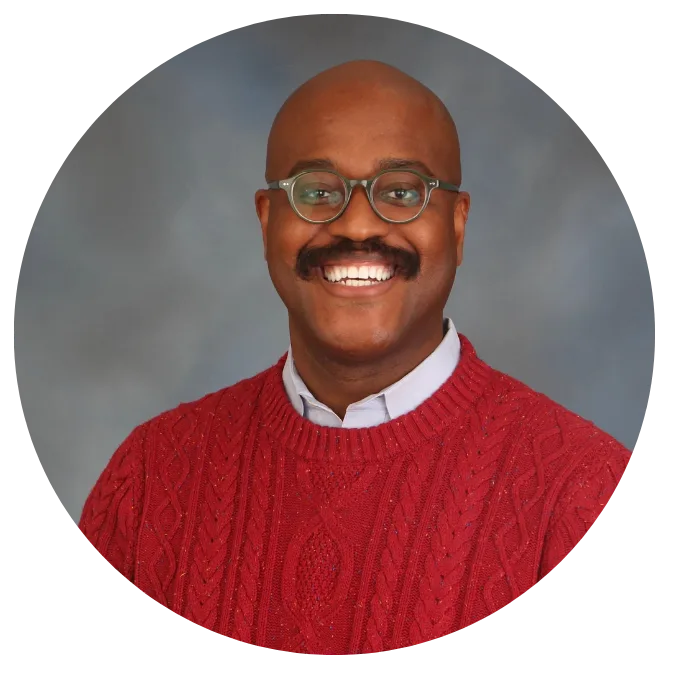
Ethan Stubbs, M.Ed., is an alumnus of Florida State University and the University of Kentucky with more than two decades of experience in fraternity and sorority life. He has served in both national headquarters and campus-based roles, supporting fraternity and sorority offices through programming, facilitation, and training. These experiences give him a broad perspective on how to empower students, alumni, and organizations in building values-driven, resilient communities. Throughout his career, Ethan has focused on developing confident student leaders, strengthening organizational partnerships, and advancing inclusive and sustainable fraternal communities across higher education.